Lord, Teach Us To Pray – 17th Sunday in Ordinary Time – Sermon by Father Levine
Fr. Joseph Levine; Holy Family Catholic Church and Missions, Burns, Oregon; July 27, 2025
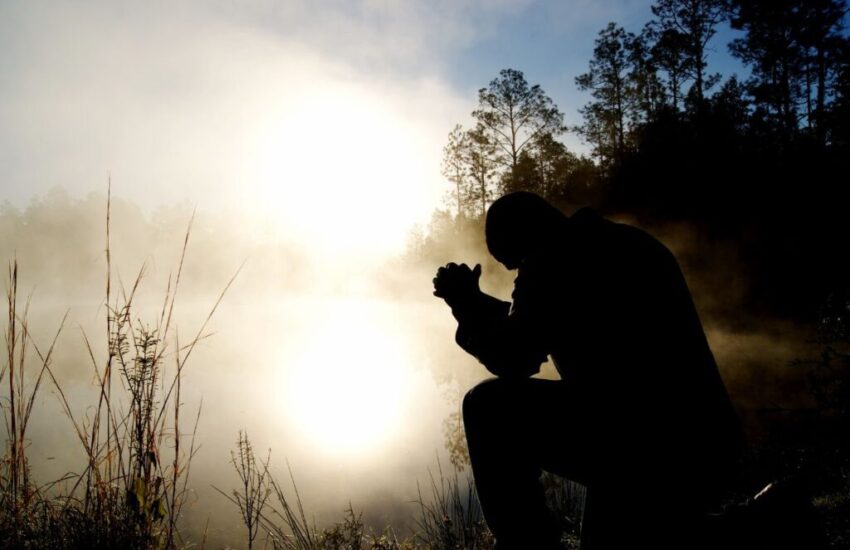
Lord, teach us to pray. The disciples’ request is itself a sort of beginning of prayer. The request is inspired by Jesus’ example, which means that the disciples want to share in what they see that he has, namely his relation to his heavenly Father. That tells us something about prayer, Christian prayer. Christian prayer means sharing in the relation of Jesus, the Son of God, to his heavenly Father. That is a relation that we already share through our baptism, but there is a difference between merely having the gift as something received and “using” the gift, living from the gift.
Lord, teach us to pray. Personally, I had to start from scratch as an adult. For about the first twenty years of my life, I did not believe in God, I was not taught about God, I did not think about God, and I did not pray. When in his mercy he touched my life, turned me to himself, and brought me into his Church, I quickly realized that to live as a Christian and Catholic I needed to pray but I had little idea of what this unfamiliar activity might involve.
Well, it clearly involved talking to some unseen entity, but what was one to say, what was one to talk about? I was about as tongue-tied as a teenage boy is when he is asked to talk about his “feelings”. And, for his part, did this unseen entity answer? Did he speak? And how? How was he to be heard? The prophet Elijah heard God speaking to him in a still small voice, a gentle barely detectable whisper. (cf. 1 Kg 19:12) That suggests that if you have a lot of noise inside of you and around you, you might well miss the voice of God.
If someone seeks to learn about prayer he will discover that there is vocal prayer and there is mental prayer, because both mind and body need to be applied to prayer; there is also the gift of contemplative prayer. When we address God in prayer, we should first of all be honest; God sees through all our fakery; we cannot hide anything from him. Further, while God is unseen, he gives us a visible focus in the image of Jesus Christ, the Son of God made man, God made visible, and also the saints who have become one with him. Further, Jesus Christ is present to us in the Holy Eucharist and speaks to us through his word.
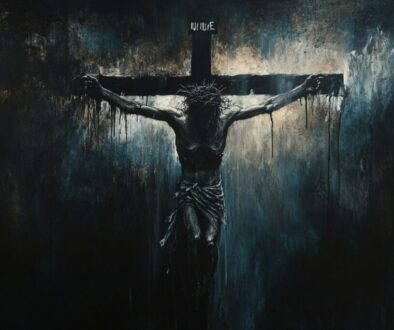
For the record, let me mention some great “schools of prayer” that I found helpful. First, the holy rosary. I came across a book “The Scriptural Rosary” and learned to pray the rosary, reciting a passage of Scripture for each “Hail Mary.” Then the Stations of the Cross, which taught me to meditate on the Lord’s Passion and Death. Then, praying with the Church through the “Liturgy of the Hours”. Then, Eucharistic Adoration. Then there is the great teacher of prayer, the great “prayer”, the Blessed Virgin Mary.
Now, if after 44 years as a Catholic, including 7 years spent in the religious life and now almost 15 years as a priest, I were asked to describe my life of prayer an attempt at an answer could prove a bit embarrassing. Certainly, there have been great moments, but how could I describe them. If, on the other hand, I were to try and describe my day-to-day life of prayer, it might seem rather hum-drum. Not at all what you might expect if you read certain books, especially not the ones that promise “results”. Nor is it as though prayer is but one activity of life set apart from the rest; the life of prayer is interwoven with the whole of life.
A description of my day-to-day life of prayer might seem a bit hum-drum, but that would also be true were I to describe my breathing. Prayer is to the Christian life what breathing is to the physical life, except that while we do not need to think about breathing, prayer needs to be intentional.
To avoid sin and to do good, day in and day out, we need the grace of God, which we can attain only by turning to him in prayer. Indeed, the one grace that is always ready at hand is the grace to turn to God in prayer.
We should begin the day with prayer and end the day with prayer; during the day we should turn to God as often as we can. Wherever we are, whatever we are doing, God is there.
For all that my daily life of prayer might seem hum-drum, hum-drum to the fallen “flesh”, I would not exchange it for anything in the world. Without that daily practice of prayer, without that “salt”, nothing else has any savor. In what might seem to be the plainness of prayer, God is hidden, and nothing can compare with his presence, even when hidden.
Wisdom is better than jewels, and all that you may desire cannot compare with her. (Pr 8:11)
We could also consider the manna that sustained the Israelites for 40 years in the desert. It was very plain and it required daily labor to collect it. The Israelites reached a point in which they grew weary of the manna, desiring rather the spicey food of Egypt. That didn’t turn out too well for them. (cf. Nb 21:4-9) Yet, of the manna it was said, despite its plainness, that it provided, every pleasure and [was] suited to every taste. (Wis. 16:20) The manna, of course, was a prophetic symbol of the Holy Eucharist, the food that nourishes the life of prayer.
Maybe the best way to describe my daily prayer is by way of some images from Scripture:
There is the prayer of the blind man of Jericho, Bartimaeus, who sits by the roadside and cries out incessantly, Jesus, Son of David, have mercy on me! And when Jesus calls him and asks him what he wants, he replies, Master, I want to see. (Mk 10:47, 51) I want to see God.
Then, of course, there is the tax-collector, who goes into the temple and prays, God, be merciful to me, a sinner! (Lk 18:13)
Or the leper who approaches Jesus, kneels before him, and says, Lord, if you will, you can make me clean. (Mt 8:2)
Of course, we should seek to be attentive to God in prayer, but we are weak and at times God seems distant. We can benefit from the words of Blessed Humbert of Romans: “It should be known that even when from human weakness someone cannot have his heart firmly in his prayers, he should not for that reason grow weary of praying, since even though a poor man may not be continuously crying out, he nevertheless moves the master of the house to have pity on him simply by his bodily appeal as he sits there at the gate all day long. And much more should one trust in the mercy of our God. … When there is a meritorious intention at the beginning of prayer, the whole work that follows is meritorious, even if one is not always actually thinking about it.” (Cf. Magnificat Magazine, July 2025, pg. 392)
At the root of prayer must be trust in God and the faith that is the foundation of that trust. Is our faith weak? Then we can say with the man in the Gospel, I believe, help my unbelief! (Mk 9:24)
Fr. Michael Gaitley, author of 33 Days to Morning Glory, a preparation for Marian consecration, summed up the spirituality of St. Therese of Lisieux, the “Little Way”, as “Keep trying, keep trusting, and love your littleness.” Or, never let yourself be discouraged as you present the misery of your soul to God. It is, indeed, your misery that invites his mercy.
St. Therese viewed the great saints as eagles soaring aloft and gazing upon the divine sun. Of herself, she wrote: “I look upon myself as a weak little bird with only a light down covering. I am not an eagle, but I have only an eagle’s EYES AND HEART. In spite of my extreme littleness, I still dare to gaze upon the Divine Sun, the Sun of Love, and my heart feels within it all the aspirations of an Eagle.” (Story of a Soul, Ch. 9) So this little eaglet, unable to fly, sets herself to gaze upon the sun, to fix her gaze, whether the sun is shining or behind the clouds, and even when she is getting drenched by the rain. The little eaglet is weak and gets distracted by some trifle, but she returns to her task of gazing upon the sun.
When we think of prayer we think of asking things of God and that is certainly involved. We are like beggars before God. We ask for his mercy. We ask for his help. We might ask for all manner of specific things that we think we need. It is good to recognize that all these things are within God’s power and we should direct our prayer to God even for things that are in some way within our own power.
The elder Tobit advises his son, Tobias, Bless the Lord God on every occasion; ask him that your ways may be made straight and that all your paths and plans may prosper. (Tob 4:19) Even before undertaking simple things, that we know how to do, that we have done many times, matters in which we consider ourselves expert, we should not take things for granted. Our “expertise” is itself a gift of God and needs to be rightly used.
Yet, while we ask God for the things we think we need, we must allow ourselves to be shaped by his word and his will. Our asking should be guided by what he makes known through his word and we should be ready to submit to his will, especially in difficult matters, following the example of Jesus, who prayed in the garden, Abba, Father, all things are possible to thee; remove this cup from me; yet not what I will, but what thou wilt. (Mk 14:36)
Note, that the only time in which Jesus is actually recorded as using the intimate “Abba” is when he prays in the Garden of Gethsemane. That suggests that when we learn to submit our will to God, in difficult and painful matters, we truly begin to discover his loving and merciful fatherhood.
We ask for things from God, and he wants to give us good things, but above all he wants to give us himself, through the gift of his Holy Spirit. The Holy Spirit leads us through Christ into the presence of the Father who sees in secret. (cf. Mt 6:6) It is the Holy Spirit who makes us to be children of God, conformed to the image of Christ, the only begotten Son, crying out, Abba, Father. (Rm 8,14-16;29; Gal 4:6)
This is the heart of prayer, living as children in the presence of our heavenly Father.
We must be persistent, asking, seeking, and knocking, persevering, like Mary Magdalene stayed at the empty tomb of Jesus until he appeared to her, until we are admitted to that inner chamber.
Well after 44 years, I am still learning.
Lord, teach us to pray. That very beginning of prayer, that desire to pray, to learn to pray, to enter into communion with God, does not come from us, but is already the gift of God, the work of his grace within us.
You did not choose me, but I chose you. (Jn 15:16) These are consoling words and should encourage us to always turn to prayer or turn back to prayer without giving way to discouragement.
Seek a Deeper Connection with God and Join Lay Cistercians of South Florida
Lay Cistercians of South Florida, is a community of lay people who seeks to have a deeper connection with God by living a life inspired by the monks and nuns through Lay Monasticism. Learn more about what is a Lay Cistercian on our website. Anyone who aspires to do the same as us, and is a confirmed Catholic is welcome to join us! We meet every second Saturday of the month at Emmanuel Catholic Church in Delray Beach, Florida.

This Content Has Been Reviewed For Accuracy
This content has undergone comprehensive fact-checking by our dedicated team of experts. Discover additional information about the rigorous editorial standards we adhere to on our website.