Sacramental Faith and True Religion – 19th Sunday in Ordinary Time – Sermon by Father Levine
Fr. Joseph Levine; Holy Family Catholic Church and Missions, Burns, Oregon; August 10, 2025
Faith is the realization of things hoped for and the evidence of things not seen.
Or we might say that the goal of hope begins to be achieved in faith and that the interior conviction of the unseen reality, through its outward action, gives evidence for the same reality.
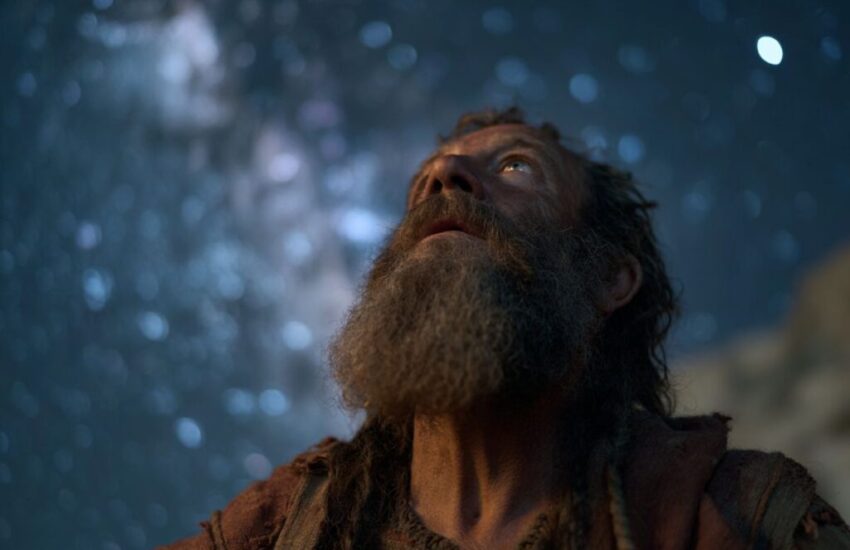
Abraham believed God, who called him to go out from his native land to a place that he was to receive as an inheritance. God promised that this childless man who was already old and whose wife was advanced in years, would become the father of a multitude as numerous as the stars of the sky and as countless as the sands on the seashore. Believing God and going forth from his land, the realization of the hope had already begun; certain that the One who made the promise was trustworthy, evidence of the unseen reality began to appear in his life. He already began to dwell in the promised land and he saw the birth of Isaac, the child of the promise. Yet, this visible evidence, the fruit of his faith, pointed towards an invisible reality, a heavenly homeland and a city whose architect and maker is God and to the One foreshadowed by Isaac, when he was offered in sacrifice, Jesus Christ, the Son of God, crucified and risen, the father of the world to come, the true father of all the redeemed. (cf. Is 9:6)
Notice, then, that in Abraham’s faith there is one thing that is seen, in which the fulfillment of the promise already begins to be realized, and which points beyond itself to something unseen, the complete realization of the promise in God. Abraham’s faith, then, has a sort of “sacramental” quality, for the classic general definition of a sacrament is “a visible sign of an invisible grace, instituted for our justification.” (St. Bernard, Serm. de Coenae Domini, c.2, cited Roman Catechism, Part II)
The lives of all who believe and receive the sacraments should bear this “sacramental” quality as living signs of the invisible reality of God.
Our 1st reading today speaks to us of the institution of the ancient sacrament of the “Passover”. We are familiar with the sacraments of the Church, but there were also the sacraments of ancient Israel. The sacraments of ancient Israel were prophetic signs of Christ to come, while the sacraments of the Church are sacraments of power, communicating to us the grace that Jesus Christ won for us on the Cross.
On the night of the first Passover we learn that the ancient fathers, believing in the promise of God, awaited his salvation, and offered sacrifice, putting into effect with one accord the divine institution. The faith, the symbolic action of putting into effect the divine institution, and the salvation were all bound together. As Abraham, believing in God’s promise, obeyed him and went out from his land, so the fathers of ancient Israel, believing in God’s promise, obeyed him and put into effect the divine institution. That divine institution included smearing the doorposts of their houses with the blood of the lamb, the lamb that foretold the Lamb of God, whose precious Blood takes away the sins of the world. That sign of the Blood of the Lamb is what preserved the Israelites from the destroying angel and began their deliverance from slavery in Egypt.
Their faith was thus the realization of things hoped for and the evidence of things not seen.
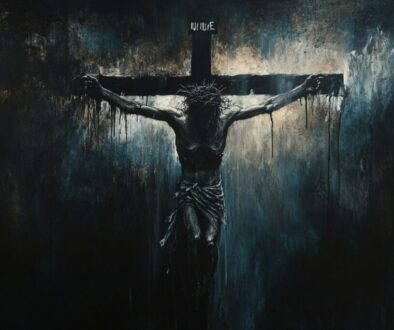
On the night of the Last Supper, Jesus, the Son of God made man, celebrated the Passover with His Apostles. He told them, You believe in God, believe also in me. (Jn 14:1) He offered sacrifice, the sacrifice of his Body and Blood, the Blood of the true Lamb; His Body and Blood were really present beneath the appearances of bread and wine; His sacrificial death was represented by the separate consecration. Offering sacrifice and entrusting the sacrifice to the Apostles, saying, do this in memory of me, He put into effect His divine institution. The following day He accomplished our salvation, giving His life on the Cross, delivering us from the slavery of sin and death.
The divine institution of the Passover established the Israelite religion, which was transitory (cf. Heb 8:13), preparing the way for Christ; Christ’s divine institution of the Holy Eucharist, establishes the Christian and Catholic religion, the true religion, the religion of the new and eternal covenant in the Blood of Christ.
Christ’s divine institution of the Holy Eucharist, of the Holy Sacrifice of the Mass, entrusted to the Apostles continues in the Church, making the Church herself to be a divine institution. There is the faith of the Church, with which this institution is continually put into effect; there are the visible appearances of bread and wine; there is the now invisible reality of the Body of Christ; there is the invisible reality of sanctifying grace, nourished in the souls of those who receive with faith and devotion; there is the promise of eternal life in the heavenly Jerusalem.
Once again, faith is the realization of things hoped for and the evidence of things not seen. There is the visible realization of hope in the appearances of bread and wine; there is the unseen reality of the Body and Blood of Christ, the promise of eternal life. Amen, amen, I say unto you … he who eats My flesh and drinks My blood has eternal life, and I will raise him up on the last day. (Jn 6:54)
Everything in the Church revolves around this divine institution, the sacrifice to be offered and the sacrament to be received for the sanctification of souls who await eternal salvation through the Blood of the Lamb. For this the priesthood exists. For this the Pope and Bishops have been endowed by Christ with true teaching authority. For this it is given to them to govern the Church, as a work of service for the sanctification and salvation of souls.
The Second Vatican Council tells us that “the liturgy, ‘through which the work of our redemption is accomplished,’ most of all in the divine sacrifice of the Eucharist, is the outstanding means whereby the faithful may express in their lives, and manifest to others, the mystery of Christ and the real nature of the true Church. It is of the essence of the Church that she be both human and divine, visible and yet invisibly equipped, eager to act and yet intent on contemplation, present in this world and yet not at home in it; and she is all these things in such wise that in her the human is directed and subordinated to the divine, the visible likewise to the invisible, action to contemplation, and this present world to that city yet to come, which we seek. While the liturgy daily builds up those who are within into a holy temple of the Lord, into a dwelling place for God in the Spirit, to the mature measure of the fullness of Christ, at the same time it marvelously strengthens their power to preach Christ, and thus shows forth the Church to those who are outside as a sign lifted up among the nations under which the scattered children of God may be gathered together, until there is one sheepfold and one shepherd.” (Sacrosanctum Concilium 2)
Faith is the realization of things hoped for and the evidence of things not seen. The hope begins to be realized in the Church, the household of faith, the visible sign of God’s presence in this world, the beginning of the world to come.
Abraham was called forth from his own land to journey to a heavenly homeland; obeying God, he enacted that journey in symbolic fashion on this earth, traveling from Mesopotamia to the land of Canaan. As Christians we are called “children of Abraham” because we share his faith (cf. Gal 3:7); he believed in Christ to come, born of his own descendants; we believe in Christ, the Son of Abraham and Son of God, the fulfillment of the promise, who died and rose for our salvation.
We too are called from our earthly life to seek a heavenly homeland. Our common homeland is the Body of Christ in whom all the promises of God are fulfilled. (cf. 2 Cor 2:20) He is there now seated in glory at the right hand of the Father; the same reality of Christ’s glorious Body is here present to us in the Holy Eucharist.
Last Sunday we heard: You have died and your life is hidden with Christ in God. When Christ your life appears, then you to will appear with him in glory. (Col 3:3-4)
He said, heaven and earth will pass away, but my words will not pass away. (Mt 24:35) His words include: this is My Body, this is My Blood. The appearances of bread and wine will pass away with the heaven and earth; His Body will then be revealed in glory, together with all His faithful members who have been united to him, who have shared his life in this world.
In the meantime, where the Body is, there the eagles of faith will gather. (cf. Mt 24:28)
When we adore the Body of Christ, on the altar, in the monstrance, in the tabernacle, or at the moment before communion, we are before the hidden presence of the new heaven and new earth in which justice dwells. (cf. 2 Pe 3:13)
Gird your loins and light your lamps and be like servants who await their master’s return from a wedding, ready to open immediately when he comes and knocks. Blessed are those servants whom the master finds vigilant on his arrival.
The celebration of the Mass and the adoration of the Holy Eucharist is the place of vigilance because here the reality is already present. To gird your loins is to chasten every earthly desire, subordinating them to the desire for Christ’s kingdom. Seek first the kingdom of God and its justice, then all these things [that you need] shall be yours as well. (Mt 6:33) The lit lamps speak of faith, exercised in good works, faith that hears the word of God and puts it in practice. (cf. Mt 5:16, 7:24). Already for those who are vigilant, Christ girds Himself and has them sit at the table of the Holy Eucharist and feeds them with His true Body and Blood.
Seek a Deeper Connection with God and Join Lay Cistercians of South Florida
Lay Cistercians of South Florida, is a community of lay people who seeks to have a deeper connection with God by living a life inspired by the monks and nuns through Lay Monasticism. Learn more about what is a Lay Cistercian on our website. Anyone who aspires to do the same as us, and is a confirmed Catholic is welcome to join us! We meet every second Saturday of the month at Emmanuel Catholic Church in Delray Beach, Florida.

This Content Has Been Reviewed For Accuracy
This content has undergone comprehensive fact-checking by our dedicated team of experts. Discover additional information about the rigorous editorial standards we adhere to on our website.