The Banquet of Humility and Charity – 22nd Sunday in Ordinary Time – Sermon by Father Levine
Fr. Joseph Levine; Holy Family Catholic Church and Missions, Burns, Oregon; August 31, 2025
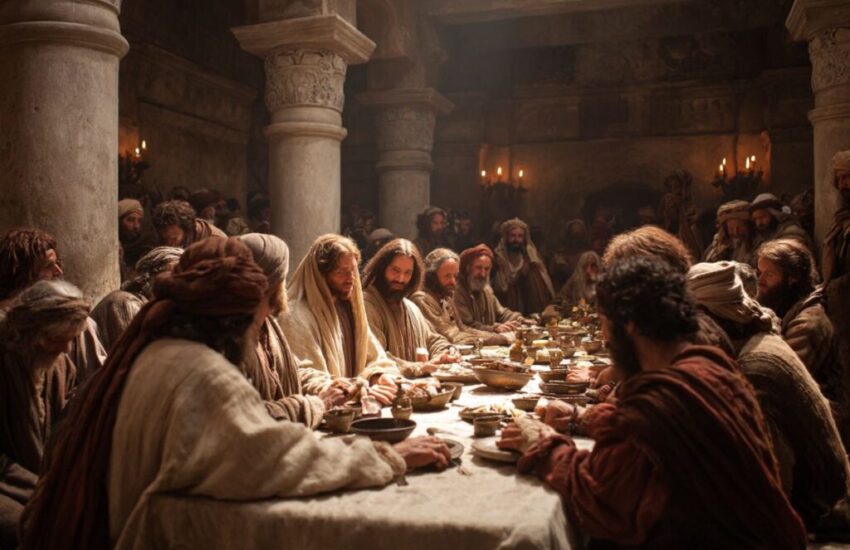
Jesus, having been invited to a banquet, observes the banquet and gives instructions about attending banquets and giving banquets. His instructions are not about good manners at banquets; indeed the banquet serves as an image for the whole of life. His teaching bears on the two most important and deeply related virtues, humility and charity. His lesson on attending the banquet and seeking the lowest place is a lesson on humility; his lesson on inviting to your own banquet those in need who cannot repay you is a lesson on the gratuity of charity. Without humility there is no charity. The same pride that blocks humility and seeks the place of honor, blocks charity and refuses to give without some repayment, at least that of gratitude.
Let’s consider humility first. Now, the example Jesus gives is a banquet in which there is a place of honor and a lowest place, and evidently all the places in between. In a word, there are many places and not all of them are equal. The virtue of humility presupposes and accepts some sort of inequality in human affairs.
Well, that word “inequality” does not sound very well these days; after all we are all supposed to be “equal”. Well, St. Paul’s interpretation of Jesus’ teaching also does not sound well these days, In humility count others better than yourselves. (Ph 2:3)
So before talking about the inequality presupposed by humility maybe we had better start off with a few words about the true import of human equality.
First of all, we are all equally human, all equally created in the image of God, all endowed with the gifts of intellect and will, even if in different measures and even if in some the use of those gifts is impeded by some disability. The very nature, characterized by such gifts, is what sets us apart and raises us above the animal world. That nature calls for a fundamental respect for each person who possesses it, even if they use it unworthily.
Second, that nature is capable of receiving and being transformed and elevated by divine grace to share in the life and nature of God, becoming thereby true children of God. The measure of grace is unequal in those who receive it; none is equal to the Blessed Virgin Mary and of the saints in heaven it is written, star differs from star in glory. (1 Cor 15:41) Yet all who equally possess the nature are as such equally capable of receiving the gift of grace.
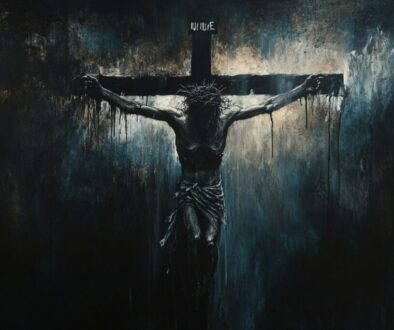
As for that equal capacity for grace, there is a corresponding negative equality; all the children of Adam equally stand in need of Christ’s redemption, the shedding of his Blood on the Cross, for the obstacle of sin to be removed that they might receive that grace. We could make a sort of exception for the Blessed Virgin Mary, who like everyone else needed redemption, but was never unredeemed and then redeemed; rather, through the grace of her Immaculate Conception, she received the gift of redemption with her very existence.
Notice, that even when we speak about the fundamental human equality regarding both nature and grace, we cannot help speaking of inequalities in the actual gifts of nature and grace. Further, when we move beyond the consideration of mere individuals to consider human life in society then we are faced with all manner of inequalities, beginning with the inequality between parents and children, which is the foundation of the 4th commandment, Honor your father and your mother.
Certainly, there are unjust inequalities, such as when one man holds another in slavery. And there are inequalities that are just, but which give rise to a power differential that is then abused, giving rise to injustice, as when an employer defrauds his employee of his wages. Nevertheless, the mere fact of inequality is by no means unjust. Humility accepts that fact; pride rejects it (or rejects it for others, but not for myself).
Let us consider a very unequal society that everyone recognizes as such, namely the military, with its series of ranks. In the US Army there are private soldiers, non-commissioned officers with the master sergeants at the top, commissioned officers with the generals at the top. Everyone knows their rank and is expected to show due honor to those in higher rank.
Now imagine an enlisted man who salutes the officer and says, “Yes sir”, but shows by his voice and attitude that he resents the inferiority; his voice and attitude reveal his pride, show that in his heart he desires a higher place at the banquet. Next, imagine a private who, while off base, in order to win admiration and respect of others, presented himself as sergeant – besides acting foolishly in a way that is bound to land him in deep water – his pride shows itself in vainglory. Vainglory is the folly of pride, like the man who seeks the first place at the banquet, though he should know it is reserved for someone else.
Now, in the military it is expected that someone seeks advancement, but by entering at the lowest level and earning that advancement. A humble man who enters the military service accepts that he must start at the bottom, gives due respect to his superiors, does not seek any undue advancement, but seeks advancement by diligently applying himself to his task and his study for advancement, submitting his request and waiting patiently for the decision. His interior peace is not disturbed because he does not have, or does not yet have, a higher rank. The humble man is at peace in his proper place, while the proud man resents his subordinate status.
Now, when we consider the military, we also readily understand the reason for the different ranks; the structure of command and obedience forms the military into a corporate body working together to accomplish a mission, winning the battle. When everyone wants to command and no one wants to obey, the work does not get done and the mission is not accomplished.
The fourth Pope, St. Clement, in a famous letter to the unruly Corinthians, appealed to the example of the Roman Legions.
“Let us consider those who serve under our generals, with what order, obedience, and submissiveness they perform the things which are commanded them. All are not prefects, nor commanders of a thousand, nor of a hundred, nor of fifty, nor the like, but each one in his own rank performs the things commanded by the king and the generals. The great cannot subsist without the small, nor the small without the great. There is a kind of mixture in all things, and thence arises mutual advantage. Let us take our body for an example. The head is nothing without the feet, and the feet are nothing without the head; yea, the very smallest members of our body are necessary and useful to the whole body. But all work harmoniously together, and are under one common rule for the preservation of the whole body.” (Letter to the Corinthians, 37)
The different functions in the army or in the body show us the reason for the just inequalities that exist; they serve the good of the whole. Charity, rooted humility, accepts one’s place in body and gladly puts oneself at the service of the good of the whole, the common good. It is the Cross of Christ, through which we die to ourselves so as to live to God, that unleashes charity and sets us free to give ourselves gladly to such a life of service.
The inequalities mean that some have need of the assistance of others, yet everyone has some need and everyone has something to give. Some gifts, considered in themselves are greater, but greatness that really matters is the greatness of charity that gladly makes use of the gifts one has in the service of others.
Nor should we look at our doing our part, in humility and charity, as buckling down and becoming a mere “cog in the machine.” Serving the good of the whole does not mean serving some tyrant who lords it over the members; the true good of the whole is the good of each one. We know that if we have ever experienced belonging to a happy family or a good team.
Of course, charity knows how to suffer unjust inequalities when it is powerless to correct them, while it is courageous to correct injustice when able to do so.
Further, the whole is not a lifeless reality; all legitimate human societies from family to nation are good, are different kinds of social bodies, but the greatest whole is more than just a human reality. The greatest whole to which we can belong is nothing less than the Body of Christ.
The 13th chapter of St. Paul’s 1st Letter to the Corinthians is justly famous for its praise of charity, of love. It is significant that St. Paul’s praise of charity follows upon his exposition in the 12th chapter on the Church as the Body of Christ.
For just as the body is one and has many members, and all the members of the body, though many, are one body, so it is with Christ. For by one Spirit we were all baptized into one body … and made to drink of one Spirit. (1 Cor 12:12-13)
St. Paul goes on to speak about the different roles in the Body of Christ, some more noble, like the eyes, other apparently less noble, like the feet, but all necessary for the well being of the body. So, if one member suffers, all suffer together; if one member is honored, all rejoice together. (1 Cor 12:26)
We can say the common good of the Body of Christ, which we all are given to enjoy, if we truly share the life of the Body, is the gift of the Holy Spirit. The more each member accepts his part in humility and does his part, gladly, acting in charity, the better the whole body of the Church fulfills its mission, and the more readily the members are able to enjoy the life of the Holy Spirit.
So, elsewhere St. Paul writes, Doing the truth in love, we are to grow up in every way into him who is the head, into Christ, from whom the whole body, joined and knit together by every joint with which it is supplied, when each part is working properly, makes bodily growth and upbuilds itself in love. (Eph 4:15-16)
In this Body we draw near to Mount Zion and the city of the living God, the heavenly Jerusalem, and countless angels in festal gathering, and the assembly of the firstborn enrolled in heaven, and God the judge of all, and the spirits of the just made perfect, and Jesus, the mediator of a new covenant, and the sprinkled blood that speaks more eloquently than that of Abel. We draw near to this reality, right here in the Eucharistic assembly, in the Holy Sacrifice of the Mass, where Jesus, our Mediator acts, through the ministry of his priests, placing his living Body and Blood upon the altar, in the form of a sacrifice that renews the covenant and he gives us the fruit of that sacrifice in the banquet of holy communion.
Here we begin to see that the whole of human life is as a great banquet, to which we have been invited, at which we must find our place, humbly starting at the lowest place, and in which me must learn to serve with joyful charity, welcoming others to the banquet of our charity, without seeking anything in return.
Seek a Deeper Connection with God and Join Lay Cistercians of South Florida
Lay Cistercians of South Florida, is a community of lay people who seeks to have a deeper connection with God by living a life inspired by the monks and nuns through Lay Monasticism. Learn more about what is a Lay Cistercian on our website. Anyone who aspires to do the same as us, and is a confirmed Catholic is welcome to join us! We meet every second Saturday of the month at Emmanuel Catholic Church in Delray Beach, Florida.

This Content Has Been Reviewed For Accuracy
This content has undergone comprehensive fact-checking by our dedicated team of experts. Discover additional information about the rigorous editorial standards we adhere to on our website.