Baptism and the Sacrifice of Thanksgiving – 28th Sunday In Ordinary Time – Sermon by Father Levine
Fr. Joseph Levine; Holy Family Catholic Church and Missions, Burns, Oregon; October 12, 2025
Today’s Gospel conveys a simple and fundamental message about gratitude to God. At the same time, that only the man foreign to the people of God gives thanks, conveys the message that alas, giving thanks to God is often neglected by those who have the most reason to be grateful. All too easily we take God for granted. It is then, a good practice frequently to make a point of “counting our blessings” and giving thanks to God for the innumerable benefits he has bestowed on us in our life.
Indeed, in our day-to-day life, we easily get taken up with the negative side of things, whether in our personal life or in world events; when we become preoccupied with the darkness, suffering, violence, and evil we lose our perspective on reality.
Last Sunday I spoke about the grim reality of the “culture of death”. We must not let even such grave evils as that cause us to lose our perspective. The good is always the deeper, more pervasive, and fundamental reality. Evil is nothing more than a parasite on the good. Were it not for the deeper reality of the good, we would never be able to recognize evil for what it is. If the ability to see were not such a great good, there would be nothing to lament in blindness; so blindness itself points to the good of vision; so also death bears witness to the goodness of life.
Even more, we like to take personal credit for good while blaming evil on others, but the truth is more the other way around. We are not the source of the good; it is rather an undeserved gift of God. Even the good that we are naturally and spontaneously able to do, that comes easily to us, presupposes the goodness that God has planted both in our common human nature and in our individual person. A true perspective – one that we need actively to cultivate – recognizes that all we are and all we have is a pure gift of God.
The most basic and fundamental gift that we have all received from God, through his work of creation, is the gift of existence and life itself. Yet today’s Gospel and first reading point to an even greater gift, without which human life fails of its purpose.
Leprosy, that disease that was such a plague on the ancient world, stands as a symbol of human life corrupted by sin. The cleansing of the leper speaks not just of forgiveness of sins, but healing of sin, the complete cleansing and healing of the soul.
The first reading in particular, the story of the leper Naaman and the cleansing of his leprosy through washing in the Jordan River, has since the early days of the Church, been recognized as a prophetic symbol of baptism and its effects. As Naaman, like the man in today’s Gospel who returned to give thanks, was a foreigner to the people of God, so today often it is the “foreigners” who come to the Church and receive baptism only as adults, rather than those who were baptized as infants, who bear witness to the greatness of the gift received.
This is, however, no reason to delay the baptism of infants; rather the more we recognize the gift the more we should hasten the baptism of infants, who are capable of receiving this great gift; the more also we should recognize the responsibility of raising baptized children so that they might recognize and live from the gift received.
Naaman was plunged seven times in the Jordan River, the river that stands at the entrance to the promised land, the river that would later be sanctified by Jesus Christ, the Son of God made man, in his own baptism. So baptism is the entrance to the Kingdom of God. Amen, amen, I say to you, unless a man is born of water and the Spirit, he cannot enter the kingdom of God. (Jn 3:5)
Baptism is the only way to salvation that God has made known to us. If over the centuries the Church has come to recognize a wider scope for the effects of baptism this has only been by way of regarding “baptism of blood” and “baptism of desire” as different ways of sharing in baptism. If through the mysterious working of divine providence some who, through no fault of their own were never baptized in water, attain eternal salvation, this does not happen without their somehow sharing in the reality of baptism.
Naaman’s leprosy was cleansed and his flesh became like the flesh of little child. Consider that the word “flesh” is used in the New Testament especially to signify all the interior disorder of sin, then the cleansing of Naaman’s flesh signifies not just the forgiveness of sins, but a complete spiritual renewal and rebirth in the life of grace. Baptism has these two effects that are two sides of the coin: tails, the forgiveness of sins and heads, the life of grace.
The disorder of the flesh does remain until death, but has no dominion over those who are baptized, unless they betray their baptism through mortal sin, freely submitting themselves again to the rule of the flesh. For those who are faithful, or who return to the way of fidelity by way of showing their sins to a priest in the confessional, the rebellion of the flesh is an occasion for battle and a glorious victory that will be crowned in heaven.
Baptism is administered in the name of the Father, and of the Son, and of the Holy Spirit, with three pourings or immersions. The seven times that Naaman washed in the Jordan, however, signifies that baptism conveys the sevenfold gift of the Holy Spirit for the sanctification and salvation of the soul. Through baptism we receive the Holy Spirit who sanctifies the soul with the gift of sanctifying grace, making us to become true children of God, able to cry out, Abba, Father. (cf. Rm 8:14-17; Gal 4:4-7) The Holy Spirit brings also his sevenfold gift: wisdom, understanding, counsel, fortitude, knowledge, piety, and fear of the Lord. The seven gifts of the Holy Spirit enable us to live truly as children of God, walking in the way of faith, hope, and charity.
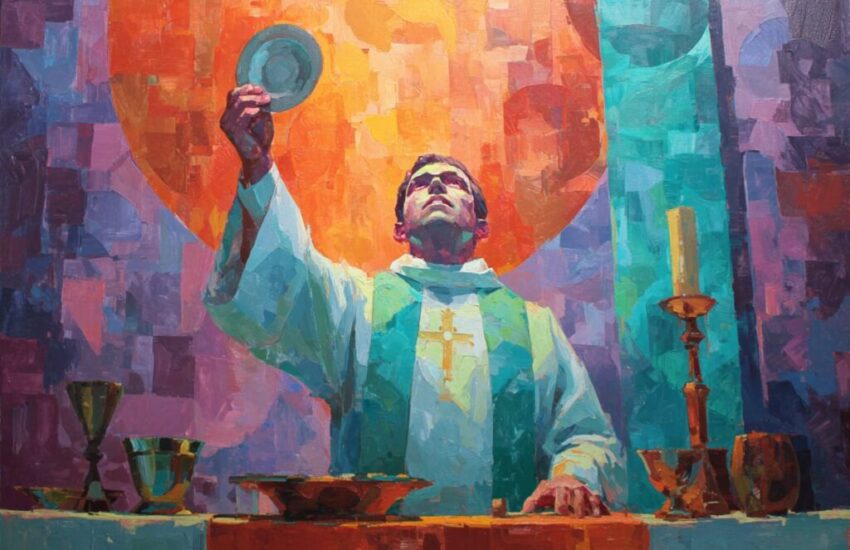
Finally, Naaman shows his gratitude by carrying the two-mule loads of earth – as the body and blood of Christ crucified – home with him and declaring, I will no longer offer holocaust or sacrifice to any other god except to the Lord. We show this same gratitude for our baptism, when refusing to worship any other God than the God of Jesus Christ and the God who is Jesus Christ – for Jesus Christ is with us a man who as Son of God offers perfect worship to the Father on our behalf and he is together with the Father and the Holy Spirit the God whom we worship – we offer sacrifice through, with, and in the divine Body and Blood of Jesus Christ. This we do in the Holy Eucharist, which is not only our adoration and expiation before God, is not only our powerful means of petition to God, but is also our supreme thanksgiving, which is the meaning of the word “Eucharist.”
The Psalmist sings: What return shall I make to the Lord for all his bounty to me? I will lift up the chalice of salvation and call upon the name of the Lord. (Ps 116[115]:12-13) And St. Paul, Whatever you do, in word or deed, do everything in the name of the Lord Jesus, giving thanks to God the Father through him. (Col 3:17)
So also, the Psalmist continues, I will pay my vows to the Lord in the presence of all his people. (Ps 116[115]:14) That means that we must bring to the Holy Eucharist, we must bring to the Holy Sacrifice of the Mass, our best efforts to live in fidelity to our baptismal vows; this life of fidelity we must offer through, with, and in Jesus Christ, whose Body and Blood are offered on the altar.
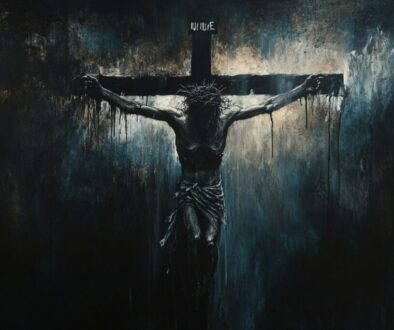
The First Book of Chronicles concludes with David’s prayer of thanksgiving at the end of his life, as he leaves to his son Solomon all that is necessary for building the temple. David sums up the whole spirit of sacrifice with the words in the simplicity of my heart I have gladly offered you all things. (1 Chr 29:17) These words are perfectly fulfilled by Jesus Christ, who is through many generations the final Son of David and also, as the Incarnate Wisdom of God and the Prince of Peace, is the true Solomon, the builder of the true temple, which is his own Body. When we turn our gaze upon Jesus Christ crucified, we see the perfect sacrifice and should know that beneath all the horrific suffering, from the depths of his Sacred Heart, even there on the Cross, Jesus says to the Father, in the simplicity of my heart I have gladly offered you all things. When we look upon the Jesus Christ crucified, we should with gratitude recall that Jesus gladly, out of love, handed himself over to this, for the glory of his Father and for our salvation. (cf. Jn 10:17-18)
For our part, our offering, begun in baptism is completed at death and so the Psalmist again continues: Precious in the sight of the Lord is the death of his saints. This is a death united to the death of Christ upon the Cross, which is the once for all death that is offered anew in the Holy Sacrifice of the Mass. (Ps 116[115]:15; cf. He 9:27-28, 10:10)
Sing a new song to the Lord! The new song is the song of the baptized. The new song is the song of faith in Jesus Christ, with hope for eternal salvation, and the love of charity for God that overflows into love of neighbor. The new song is the song of the Holy Spirit, played in the hearts and minds and deeds of the faithful. The new song is the song of thanksgiving which is the Eucharistic sacrifice.
The Lord has done wonderous deeds, winning the victory over sin and death, through his right hand, Jesus Christ, the Son of God made man. He is the salvation of God – the meaning of the name of Jesus – that the Lord has made known in the sight of the nations, fulfilling in him all the promises he made to Israel through the patriarchs and prophets. All the ends of the earth have seen the salvation of God because his name now has indeed been proclaimed in all the earth and the holy Eucharist is celebrated in all the earth.
This great good, this great thanksgiving, in which it is given us to share, outweighs in the eyes of God, all the evils, crimes, violence, and sins of men. What we offer is the blood that speaks more eloquently than the blood of Abel, the blood that does not call down condemnation, but pleads for forgiveness and mercy. (cf. He 12:24)
Seek a Deeper Connection with God and Join Lay Cistercians of South Florida
Lay Cistercians of South Florida, is a community of lay people who seeks to have a deeper connection with God by living a life inspired by the monks and nuns through Lay Monasticism. Learn more about what is a Lay Cistercian on our website. Anyone who aspires to do the same as us, and is a confirmed Catholic is welcome to join us! We meet every second Saturday of the month at Emmanuel Catholic Church in Delray Beach, Florida.

This Content Has Been Reviewed For Accuracy
This content has undergone comprehensive fact-checking by our dedicated team of experts. Discover additional information about the rigorous editorial standards we adhere to on our website.