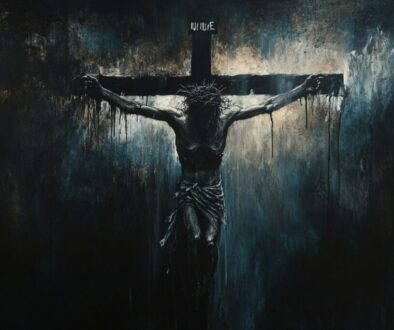
Soul of Christ, Sanctify Me! – 2nd Sunday of Advent – Sermon by Father Levine
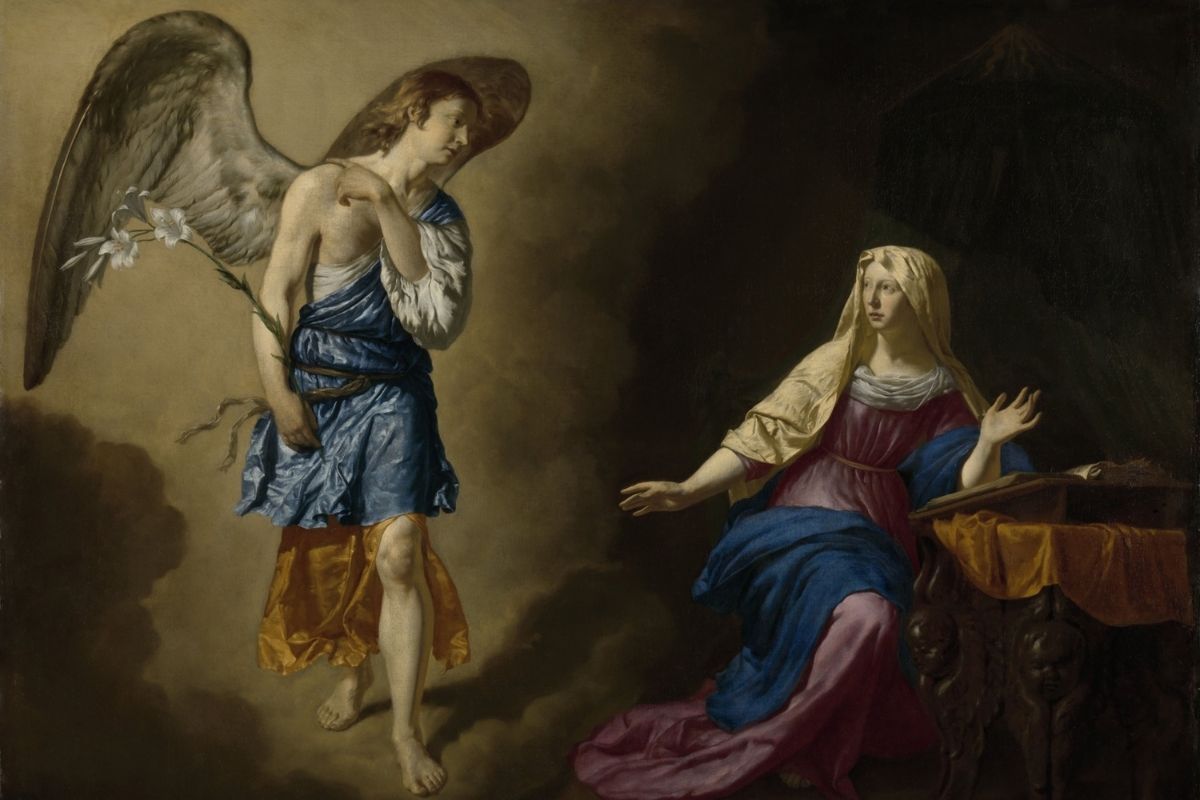
Fr. Joseph Levine; Holy Family Catholic Church and Missions, Burns, Oregon; December 7th, 2025
Thy Kingdom Come!
We say this prayer every day; if we say this prayer the words should become a reality in our desire and in our lives. For the words to become a reality in our desire and in our lives, then we must listen to St. John the Baptist, Repent, for the Kingdom of heaven is at hand! And produce fruit worthy of repentance.
The Kingdom of heaven has already come in the person of Jesus Christ, the King. The Kingdom of heaven will come most surely and fully when he returns in glory to judge the living and the dead and to usher in the new world of the resurrection. In the meantime, the Kingdom of heaven is always at hand for us.
St. Paul wrote, In everything God works for the good of those who love him, who are called according to his purpose. For those he foreknew he also predestined to be conformed to the image of his Son, in order that he might be the first-born among many brethren. (Rm 8:28-29)
The reality, then, that is in Christ, the Son of God, must be realized in us, that we might be ready to enter the fulness of the Kingdom when he returns in glory.
We can, then, consider what this means in terms of the fulfillment of the prophecy we have heard in today’s 1st reading. It has been fulfilled already in Christ’s person; it will be fulfilled in every dimension, interior and exterior, individual and social, and through every realm of the visible and invisible creation. At present it needs to be fulfilled in our lives and Christ’s instrument for that fulfillment is the visible, social, and sacramental reality of his Church.
First of all, then, there is Jesus Christ, the King, the Son of God, born of the Virgin Mary, crucified and risen, seated now in glory at the right hand of the Father.
In his sacred humanity he is the Son of David, the shoot that has sprung from stump of Jesse. Jesse was the father of David, the King. The Davidic kingdom was cut down and reduced to a bare stump when it was conquered by Babylon in 586BC, the temple was destroyed and the people sent into exile, but the “stump” of the Davidic line remained and lived for centuries in obscurity until Jesus was born of the Virgin Mary. Jesus’ birth was like a resurrection of the line of David, foreshadowing his own resurrection and ascension into heaven, bringing to fulfillment God’s promise to David: His line shall endure forever, his throne as long as the sun before me. Like the moon it shall be established forever; it shall stand firm while the heavens endure. (Ps 89[88]:36-37)
The roots from which this bud blossomed, the roots of Jesse, are the divine promise, and the divine origin of Jesus Christ, “the Only Begotten Son of God, born of the Father before all ages.” This is the source of his unfailing strength and the surety of his promise.
For this reason, the Holy Spirit rests upon him in fullness, because in the root of his divine person, he is the origin of the Holy Spirit, and with the Father sanctifies his own humanity with the fullness of his Spirit.
Consequently, the man, Jesus Christ, sees and judges as God, not by appearance and hearsay, but in truth and justice. He does not rely on human testimony since his gaze penetrates the heart. (cf. Jn 2:25, 6:34; Heb 4:12-13; Rev 1:14) He judges the poor with justice because he justifies the repentant sinner, as he did the Good Thief, (cf. Lk 23:40-43) forgiving his sins and making him to be holy and righteous in the eyes of God through the gift of sanctifying grace. (cf. Eph 1:4,7)
He strikes the ruthless devil with the rod of his mouth, with the power of his word, which is the truth that exposes the lies of the devil and the reality whereby when he comes in glory, he will defeat the Antichrist. (cf. 2 Th 2:8)
With the breath of his lips he will slay the wicked. The breath of his lips is the Spirit of Divine Love with which he speaks, because in his person he is the eternal Word, the Word that breaths love, (cf. St. Thomas Aquinas, ST Ia, q.43 a.5 ad2). The Holy Spirit slays the wicked by convicting them of their sin (cf. Jn 16:7-11); this either leads them to life through repentance, whereby they cease to be wicked, or to condemnation if they resist the grace and love of God, remain unrepentant until their dying breath, and so become guilty of the sin against the Holy Spirit. (cf. Mt 12:31-32; Mk 3:29)
The soul of Christ, like the perfect mountain of God, lifted above all earthly things, filled with the Holy Spirit, is filled also with the perfect knowledge of God, which sets his entire soul in perfect order and peace.
In the human soul there are two basic kinds of emotional desire: first there is what has been traditionally called “the concupiscible appetite”, which gives rise to the desire for things that are pleasant, to which also corresponds a repulsion for the unpleasant; and then there is the “irascible appetite,” which we might call the aggressive energy that impels us to overcome obstacles so as to attain goods that do not lie ready at hand.
These emotions are, of themselves, neither good or evil; it all depends on what they are directed to and if their intensity befits the goal. To be angry at an injustice is a good thing, so long as the anger is proportioned to the injustice, does not consume the mind, but fosters reasonable action; to fly into a rage at a slight insult is bad; to be angry because someone does a good deed is evil.
In our experience, alas, the diverse impulses of the concupiscible and irascible appetites, which should work together in harmony, under the guidance of the mind, which makes us truly human, are often at odds, like the wolf and the lamb, the leopard and the kid, the calf and the young lion, the cow and the bear. Either we follow the easy way, the way of laziness and pleasure and self-indulgence, blind to the needs and desires of others, or we pursue the path of competition, striving to get ahead and advance, ready at times to trample upon others (wearing at times a mask of righteousness) and even depriving ourselves of the ability to enjoy the good things of life. All this is exacerbated by the presence of the demonic serpent, the cobra or adder, hidden in his lair, springing his deceits upon us, poisoning our minds with his venomous lies.
In the soul of Christ, the perfect innocence of his human mind, likened to a child, completely blocks the entrance of evil and falsehood, and guides all his emotional desires, the concupiscible and irascible, in perfect harmony and peace.
Those he foreknew he also predestined to be conformed to the image of his Son. (Rm 8:29)
The Son of God did not become man just for the fun of it. He became man “for us men and for our salvation.” The riches he bestowed on his human soul were not meant for himself alone, but to share with us.
Through the gift of his grace he gives us to seven-fold gift of the Holy Spirit to work in our soul, guiding us on the path of life, that we might follow the little child, Christ; that with the serpent banished to his lair, our minds might be illumined by his word; that with our minds raised up by faith to the holy mountain of God and filled with the knowledge of the Lord and our wills fixed in hope upon his promise, our desires might then learn to follow along in the path of peace.
It is, then, the soul filled with the light of God and set in peace upon his holy mountain, that knows how to live in peace with others, seeking their good.
If we contemplate the soul of Christ, revealed to us through the words of the prophet, we see the perfection of peace in his interior, the perfection of peace that governed all his exterior deeds shown to us in the Gospels, the perfection of peace from which proceeded all his words and actions, wrought for our salvation. Everything in Christ fits together under God, the perfect harmony of his interior life, and the perfect coherence of his words and deeds showing forth the peace within, even as he stands trial before Pontius Pilate, and with perfect calm, with no trace of hostility or bitterness, responds to his bluster saying, You would have no power over me, unless it were given you from above. (Jn 19:11)
The soul of Christ is the Kingdom of God within (cf. Lk 17:21); our soul is meant to become like his soul. Repentance, then, means we recognize that our soul is unlike the soul of Christ, that we have resisted his action within us, and that we have not let him reign over us, while at the same time we desire to abandon our resistance and rebellion, that we desire to become like Christ, and that we desire that God’s purpose be accomplished in us.
In everything God works for the good of those who love him, who are called according to his purpose. To live a life of faith, hope, and charity, means welcoming this action of God in our lives, with the confidence and trust of a little child; welcoming this action of God that would shape us interiorly according to the pattern of the soul of Christ, that the kingdom of God might also reign within us.
This means welcoming the action of God through the teaching of Christ and his Church; welcoming the action of God through the working of the sacraments; welcoming the action of God through those whom who has set over us to guide and govern us, especially within the Church, seeing with the eyes of faith beyond the intentions of the human agents, to the intention of God. That means welcoming the action of God through everyone he puts in our lives and through all the events and circumstances of our lives. That means welcoming the action of God who always works for the good of those who love him.
Then conformed to the image of his Son, we will be ready for his coming in glory. We will be ready to welcome the kingdom of God, the new Jerusalem, coming down out of heaven from God , prepared as a bride adorned for her husband. (Rev 21:2) There God will wipe away every tear from their eyes, and death shall be no more, neither shall there be mourning nor pain any more, for the former things will have passed away and he will have made all things new. (Rev 21:4-5) In that city there shall no more be anything accursed, but the throne of God and of the Lamb shall be in it, and his servants shall worship him; they shall see his face, and his name shall be on their foreheads. (Rev 22:3-4)
“Soul of Christ, sanctify me. Body of Christ, save me. Blood of Christ, inebriate me. Water from the side of Christ, wash me. Passion of Christ, strengthen me. O good Jesus, hear me. Within thy wounds, hide me. Suffer me not to be separated from Thee. From the malignant enemy, defend me. In the hour of my death, call me. And bid me come to Thee, that, with thy Saints, I may be praising Thee, forever and ever. Amen.”
Seek a Deeper Connection with God and Join Lay Cistercians of South Florida
Lay Cistercians of South Florida, is a community of lay people who seeks to have a deeper connection with God by living a life inspired by the monks and nuns through Lay Monasticism. Learn more about what is a Lay Cistercian on our website. Anyone who aspires to do the same as us, and is a confirmed Catholic is welcome to join us! We meet every second Saturday of the month at Emmanuel Catholic Church in Delray Beach, Florida.

This Content Has Been Reviewed For Accuracy
This content has undergone comprehensive fact-checking by our dedicated team of experts. Discover additional information about the rigorous editorial standards we adhere to on our website.