The Universal Call To Holiness – Sermon by Father Levine
Fr. Joseph Levine; Holy Family Catholic Church and Missions, Burns, Oregon; January 18, 2026
St. John the Baptist bears witness to the man Jesus as The Lamb of God, the true sacrificial victim, offered on the Cross and in the Holy Eucharist “for the forgiveness of sins.” He also bears witness to the man Jesus as the Christ, chosen by God, anointed with the Holy Spirit, marked out by the sign of the dove. He also testifies that this same man is the very Son of God, who acts through his sacrifice and through his anointing to sanctify us through the gift of the Holy Spirit, beginning with our baptism.
That means that, as St. Paul writes in our 2nd reading today, we have been sanctified in Christ Jesus and are therefore called to be holy, like the Holy One of God, Jesus Christ. (cf. Jn 6:69)
The man Jesus, the Son of God, who sanctifies us through the gift of the Holy Spirit, is the same who is in our tabernacles and on our altars.
Already in the Old Testament, God called his people, whom he joined to himself in a covenant, to be holy, saying to the whole congregation of the people of Israel, Be holy, because I, the Lord your God, am holy. (Lev 19:2) All the more is the same command given to the Christian people, to the members of the Catholic Church, purchased for God by the Blood of Christ, joined to God through Christ in the new and eternal covenant. (cf. Acts 20:28)
What, though, does it mean to be holy?
It means to be set apart as belonging to God, to be holy and blameless in his sight, (Eph 1:4), fit to be a holy temple or dwelling place of God (cf. Eph 2:21, 1 Cor 3:16, 6:19-20), to be a holy priesthood offering spiritual sacrifices acceptable to God through Christ (cf. 1 Pe 2:5).
It means being separated from worldly ways and worldly desires, the pursuit of selfish pleasure, the slavery of greed, and the self-exaltation of pride so as to live temperately, justly, and devoutly in this age, as we await the blessed hope, the appearance of the glory of our great God and savior Jesus Christ. (Titus 2:12-13, from 2nd reading at Christmas Midnight Mass).
It means becoming like Christ himself, our great high priest, who is holy, blameless, unstained, separated from sinners, exalted above the heavens. (He 7:26)
The Psalm today reveals to us the holy Heart of Jesus, priest and victim, that is to be the pattern for our own heart. Holiness begins in the heart and from there extends its reign to every thought, desire, word, and deed, so that always and for everything we might give thanks in the name of our Lord Jesus Christ to God the Father. (Eph 5:20)
The Psalm is quoted by St. Paul, writing to the Hebrews, as expressing the disposition of Christ’s Heart from his first entrance into the world in the womb of the Virgin to his obedience to death, death on a Cross. (cf. Ph 2:8, Heb 5:7-10, 10:5-7)
Our Psalm response gives us the words, Here I am, Lord, I come to do your will. These are first of all the words of Christ who said, My food is to do the will of him who sent me and to accomplish his work. (Jn 4:34) This is not a matter of grudgingly fulfilling a burdensome task, but in the words of the Psalm, To do your will, O God, is my delight and your law is in my heart.
That is the central and defining quality of the new covenant, prophesied through Jeremiah, I will make a new covenant with the house of Israel and the house of Judah … I will put my law within them, and I will write it upon their hearts; and I will be their God, and they shall be my people. (Jer 31:31,33)
The new covenant begins in the Heart of Christ, the Son of God, the covenant of the people (Is 42:6). St. Paul writes of him: By that will we have been sanctified through the offering of the Body of Christ once for all. (Heb 10:10)
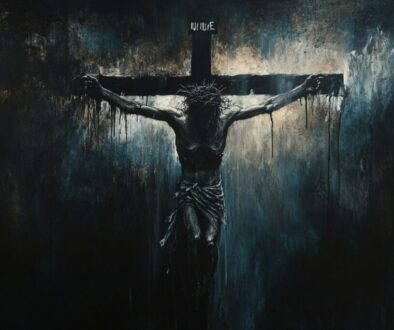
There is the interior act of the will, expressed exteriorly through his Body, to the point of offering the very life of the Body on the Cross as a sacrifice of expiation for our sins and those of the whole world, thereby accomplishing the work of the Father.
That is the pattern to which our life should be conformed, as the Immaculate Heart of Mary was conformed to that very pattern as she stood at the foot of the Cross, that is the pattern that is set before us at every holy sacrifice of the Mass, when the priest pronounces the words of consecration: “This is my Body; this is the chalice of my Blood, the Blood of the new and eternal covenant.”
Writing to the Romans, St. Paul speaks about this offering of the body as the consequence of baptism: Therefore, sin must not reign over your mortal bodies so that you obey their desires. And do not present the parts of your bodies to sin as weapons for wickedness, but present yourselves to God as raised from the dead to life and the parts of your bodies to God as weapons for righteousness. For sin is not to have any power over you, since you are not under the law [of Moses] but under grace. (Rm 6:12-14)
It all has to do with how we live out our lives in the body in all our little actions from day to day; using our eyes to gaze on godly beauty and to look upon those in need with compassion; using our ears to listen to the word of God and the needs of my neighbor; using our tongues to praise God and build up our neighbor, by instruction, counsel, correction, kindness, sympathy, and encouragement; using our hands to labor in service of the community and assist those in need; turning our feet away from places that might be an occasion of sin and instead going to the house of worship or to engage in works of mercy; these are ways that we present the parts of our body to God as weapons of righteousness.
St. Paul returns to this theme, writing insistently, I urge you, brethren, by the mercies of God, to present your bodies as a living sacrifice, holy and acceptable to God, which is your reasonable worship. (Rm 12:1) The offering of the body, however, begins within, by the renewal of the mind and the intention of the will: Do not be conformed to this world but be transformed by the renewal of your mind, that you may discern what is the will of God, what is good and acceptable and perfect. (Rm 12:2) This is all lived out in the Church, the Body of Christ. For as in one body we have many members, and all the members do not have the same function, so we, though many, are one body in Christ, and individually members one of the other. (Rm 12:4-5)
Well, I have spoken a lot about holiness, the holiness to which we are all called through our baptism, but I have not said a single word about love.
Did not Christ tell us that the whole of the law and prophets depended upon the two-fold commandment of love of God and love of neighbor? (cf. Mt 22:36-40) Did he not give us his own commandment, saying: love one another? (Jn 13:34) Did not St. Paul write, Love is the fulfilling of the law? (Rm 13:10)
Indeed, but what is love but the holiness that I have just described? It is not any love that is holy, but the love that comes from God and returns to God. It is the love that is expressed by the Psalmist, and taken up in the Heart of Christ: To do your will, O God, is my delight and your law is in my heart.
So, St. Paul writes, Be imitators of God, as beloved children. And walk in love, as Christ loved us and gave himself up for us, a fragrant offering and sacrifice to God. (Eph 5:1-2)
Christian love is sacrificial, in the renunciation of egoistic pleasure, the patient endurance of suffering, but above all in the offering of oneself wholly to God, placing oneself without reserve at his service, and in him at the service of his work of salvation on behalf of our brothers and sisters in Christ. Sacrifice is worship, before it is renunciation; love renders sacrificial worship to God. This is holiness.
And St. John writes, In this is love, not that we loved God but that he loved us and sent his Son to be the expiation for our sins. Beloved, if God so loved us, we also ought to love one another. (1 Jn 4:10-11)
So we return to the testimony of St. John the Baptist, the friend of the Bridegroom (cf. Jn 3:29): Behold, the Lamb of God, who takes away the sin of the world. That is the pattern, the example, and the source of love and holiness.
Seek a Deeper Connection with God and Join Lay Cistercians of South Florida
Lay Cistercians of South Florida, is a community of lay people who seeks to have a deeper connection with God by living a life inspired by the monks and nuns through Lay Monasticism. Learn more about what is a Lay Cistercian on our website. Anyone who aspires to do the same as us, and is a confirmed Catholic is welcome to join us! We meet every second Saturday of the month at Emmanuel Catholic Church in Delray Beach, Florida.

This Content Has Been Reviewed For Accuracy
This content has undergone comprehensive fact-checking by our dedicated team of experts. Discover additional information about the rigorous editorial standards we adhere to on our website.