The Virgin Shall Conceive And Bear A Son – Sermon by Father Levine
Fr. Joseph Levine; Holy Family Catholic Church and Missions, Burns, Oregon; December 21, 2025
All this took place to fulfill what the Lord had said through the prophet: “Behold, a Virgin shall conceive and bear a son and they shall name him Emmanuel.”
The words of the Evangelist, St. Matthew, commenting on St. Joseph’s discovery of the Virgin’s pregnancy, through the Holy Spirit, invite us to consider more in depth the prophecy. In today’s 1st reading we find the prophecy in part of its original context; in the Gospel we find reference to its fulfillment
The Lord spoke to Ahaz. Well, who was Ahaz? He was a king of Judah in the line of David.
To David, God had promised through the prophet Nathan, When your days are fulfilled to go to be with your fathers, I will raise up your offspring after you, one of your own sons, and I will establish his kingdom. He shall build a house for me and I will establish his throne forever. I will be his father, and he shall be my son. (1 Ch 17:11-13) When the angel Gabriel appeared to the Virgin Mary, he referenced this prophecy in announcing her conception of Jesus. (cf. Lk 1:32-33)
Now, Solomon, David’s son, reigned in his place and built a “house” or temple for God, but the prophecy was not completely fulfilled in Solomon. Solomon’s throne was not established forever. Solomon, in the end, did not conduct himself truly as a “son of God”. So, through the line of the kings of Judah, the promise to David is passed on, waiting its fulfillment. This is why St. Matthew opens his Gospel by tracing the genealogy of Jesus Christ, the son of David, the son of Abraham. (Mt 1:1) He traces that genealogy through Solomon. In the 14 generations from David to the Babylonian Exile, Ahaz is the ninth King of Judah in the list. (cf. Mt 1:9)
He was not, however, a good king. The Second Book of Kings informs us: Ahaz … did not do what was right in the eyes of the Lord his God, as his father David had done, but he walked in the ways of the kings of Israel (the northern Kingdom that was given to idolatry). He even burned his son as an offering, according to the abominable practices of the nations whom the Lord drove out before the people of Israel. (2 Kg 16:2-3)
The narrative in the Second Book of Kings continues to explain how the King of Syria and King of Israel made war against Ahaz and laid siege to Jerusalem. (cf. 2 Kg 16:5) Ahaz, responded not by turning to God, but by seeking help from the mighty Assyrian Empire, the regional “superpower” at the time. (cf. 2 Kg 16:7-9) Assyria will end by conquering both the kingdoms of Syria and Israel, leading to the exile of the people of the northern Kingdom, and making Judah a subject kingdom. All this took place in about 735 BC.
When God sends Isaiah to command Ahaz to ask for a sign, the war with Israel and Syria is just beginning; Ahaz and the princes of Judah are terrified of their threat. (cf. Is 7:1-2) Isaiah prophecies the defeat of their plot and the end of their kingdoms. (cf. Is 7:3-9) That is what sets the stage for the famous prophecy.
The Books of Kings reveal that so long as the Kings of Judah, in the line of David, followed in the path of David, their kingdom was invincible. They might not be powerful; they might suffer attacks from powerful enemies; but they were a free and independent kingdom. Ahaz, through his infidelity to the covenant, made the kingdom subject to Assyria and started the downward path that would lead to the destruction of the kingdom and the exile of the people, despite the efforts of two great kings, Hezekiah and Josiah, to bring the people back to the Lord.
Ahaz did not seek God or his will but wanted to be a powerful king and wanted to attain that power by human means, namely political alliances and the manipulation of idols. He failed miserably. Had he trusted in God, he would have relied on the promise the Lord had made to David; he would have met the threat of his enemies with the calm and strength that comes from such trust; he would have sought how God wanted him to face the threat, waiting and making his own action dependent on God’s timing and God’s help. He did none of this.
It is in this context that God, seeking the conversion of Ahaz, commands him, through the prophet to ask for a sign.
Now, there is something we should consider about signs given by God; they might wait fulfillment; they might actually be proofs “after the fact”. So when God appeared to Moses and sent him back to Egypt to lead the people out of slavery, he said to him, This shall be the sign for you, that I have sent you: when you have brought the people out of Egypt, you shall serve God upon this mountain. (Ex 3:12) In other words, “Trust me, follow my guidance, and you will see the results; but first you must trust me.” Or as Isaiah said to Ahaz immediately before today’s reading, If you will not believe, surely you shall not be established. (Is 7:9)
Ahaz’s refusal to ask for a sign, even after being commanded to do so, is nothing more than a pretense, a mask of false piety belied by his impious character. Were he to ask for a sign, he would have to put his trust in God, and he is unwilling to do that.
Yet, take note: God’s promise to David was unconditional; it cannot be thwarted by the unfaithful offspring of David. God will accomplish his plan of salvation despite the obstinacy and recalcitrance of human beings.
This is true to this day in the way in which God works through his Church, in which Jesus Christ, the Son of David, reigns from the right hand of God, while the clergy occupy the place of the authority in the House of David in the new Israel. The clergy can act like Ahaz, but God will still accomplish his plan.
If his children forsake my law and do not keep my commandments, then I will punish their transgression with the rod, and their iniquity with scourges; but I will not remove from [David] my steadfast love, or be false to my faithfulness. I will not violate my covenant, or alter the words that went forth from my lips. Once for all I have sworn by my holiness; I will not lie to David. (Ps 89[88]:30-34) Or as St. Paul puts it: If we are faithless, he remains faithful, for he cannot deny himself. (2 Tim 2:13)
We do not know what God would have done had Ahaz asked for a sign; what he does do instead is much greater.
The sign that God gives is both high as the heavens and deep as the netherworld, more than Ahaz, or any human being, could have conceived or imagined. It is high as the heavens because the son, Emmanuel/God-with-us, is not just a sign of God being with us, but in truth the eternal Son of God made man, who comes down from heaven, where he is equal to the Father. (cf. Ph 2:6) It is deep as the netherworld to which Christ will descend in his death, to deliver the just from the time of Adam to St. John the Baptist, and to terrify the demons and the damned, giving forewarning of their final defeat. It is a sign worthy of the greatness of God.
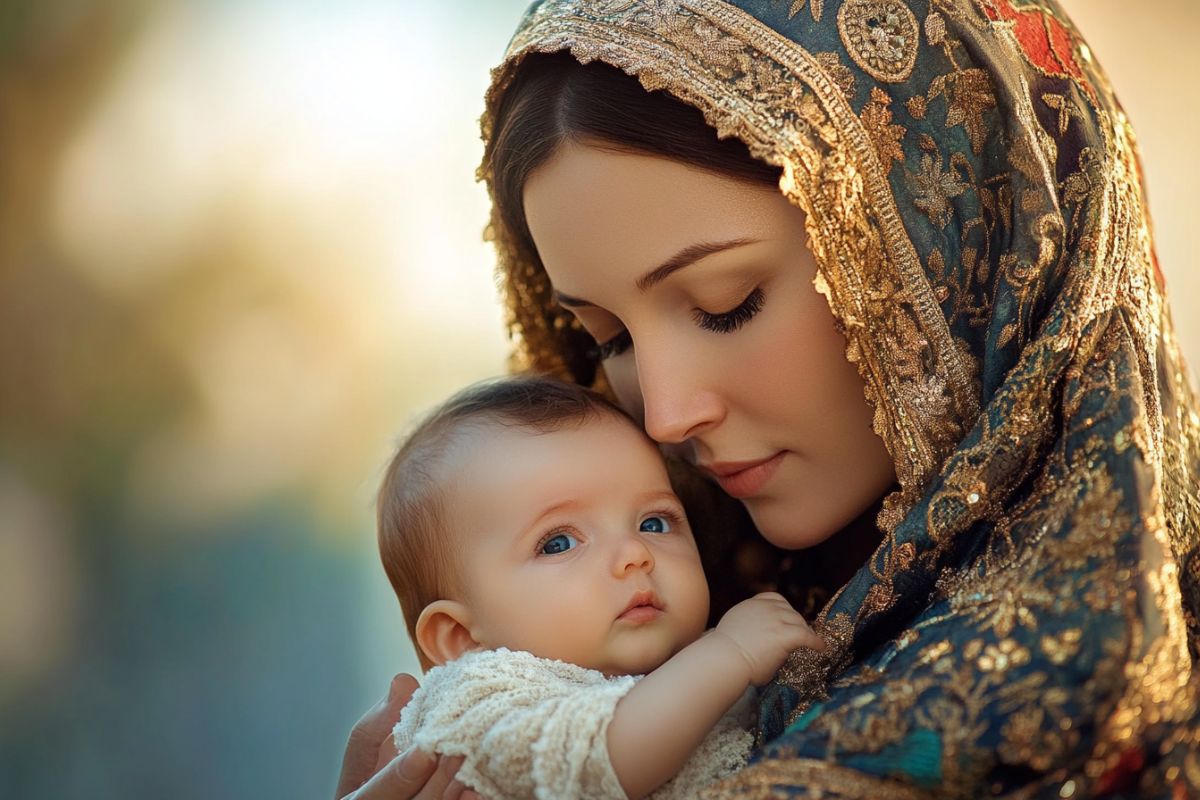
Yet, the sign, perhaps is not Emmanuel himself, at least not directly, but the Virgin who conceives. She is certainly an inseparable part of the sign. The Virgin who conceives is a sign of God’s greatness, his wisdom, and his love.
The Muslims believe that a man Jesus, the holiest of men to their mind, but not so great as their so-called prophet, was born of a virgin. For them, the virgin birth was a sign only of God’s power; it was no more than an arbitrary display of divine power – “Look what I can do.” Yet, it has no meaning beyond that.
In truth, though, when the Virgin conceives and bears a Son, it is a sign also of the Son’s divine origin and a revelation of the inner mystery of God. Therefore the child to be born will be called ‘holy’, the Son of God. (Lk 1:25) The Son of God is himself the Word through whom God created the universe. (cf. Jn 1:3) That makes him to be the very wisdom of God, revealed by the virginal conception.
And why did the Son of God become man? To reveal the love of God at work for our salvation. For God so loved the world that he gave his only Son. (Jn 3:16)
The Virgin was first revealed in Genesis as “The Woman” whom God set in enmity against the demonic serpent, whose offspring would through his own suffering vanquish the serpent. (cf. Gen 3:16) So she was also revealed as the New Eve, the true Mother of the Living, the Immaculate. Now, to Ahaz, the same woman is revealed as the Virgin and the divine identity of her son is revealed at the same time.
The sign of the Virgin is so great, so important, that the Woman’s identity, her very person, is bound up in being “The Virgin”. When this truth is understood, then it becomes unthinkable that the physical integrity of the sign should ever, in any way, be violated, not even in giving birth. Rather, as she conceived by a great miracle, her integrity will be miraculously preserved in giving birth. Indeed, taken up body and soul to heavenly glory, she becomes “The Great Sign,” the woman clothed with the sun, the moon at her feet, and a crown of twelve stars on her head. (Rev 12:1)
The sign is the Virgin and what comes from her, her Son, Jesus Christ, Emmanuel, God-with-us. Emmanuel names the reality of the divine person who took human flesh; the name given by the angel, Jesus, names his work as Savior; the title “Christ,” which means “anointed one”, names his triple office of king, priest, and prophet, in fulfillment of the prophecies, as the one who bestows the gift of the Holy Spirit.
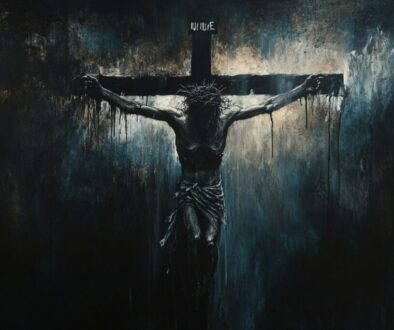
From the great sign, which is the Virgin who conceives, proceeds three other great signs: the Cross, the empty tomb that points to the resurrection, and the Holy Eucharist.
It is Emmanuel, God-with-us, who died on the Cross for our salvation; it is Emmanuel, God-with-us, who was laid in the tomb and rose again from the dead; it is the same Emmanuel, God-with-us, who is given to us in the Holy Eucharist. The man, Emmanuel, Jesus Christ, comes from his Mother upon earth, without a human father just as he comes eternally from his Father in heaven, without any mother.
All this was for us men and for our salvation. The Virgin-Mother, St. Augustine tells us, gives birth to the whole Christ, head and members, Jesus Christ and his faithful.
All this took place to fulfill what the Lord had said through the prophet.
Now, we can readily understand how the Virgin Mary is part of the fulfillment by conceiving and bringing to birth her Son, but how is St. Joseph part of the fulfillment? We seem that as the prophecy is fulfilled despite the faithlessness of Ahaz, so also it is fulfilled quite apart from Ahaz’s descendant, the faithful St. Joseph, who only learns about it after the fact. Nevertheless, St. Joseph is an integral part of the fulfillment because he becomes the great witness to and guarantee of Mary’s virginity.
The Virgin and Child are the great sign of God’s greatness, wisdom, love, and would make us, through conformity to Christ, also to be signs of God’s greatness, wisdom, and love, with hands that are sinless, hearts that are pure, and our desires freed from vanity and fixed upon God as we ascend the mountain of God, which is Christ.
What are we waiting for? Why do we doubt? Ahaz had every reason to trust in God because of his promise to David; we have much more reason to trust in God because of the fulfillment of the promise, a fulfillment that we taste in the Holy Eucharist.
Seek a Deeper Connection with God and Join Lay Cistercians of South Florida
Lay Cistercians of South Florida, is a community of lay people who seeks to have a deeper connection with God by living a life inspired by the monks and nuns through Lay Monasticism. Learn more about what is a Lay Cistercian on our website. Anyone who aspires to do the same as us, and is a confirmed Catholic is welcome to join us! We meet every second Saturday of the month at Emmanuel Catholic Church in Delray Beach, Florida.

This Content Has Been Reviewed For Accuracy
This content has undergone comprehensive fact-checking by our dedicated team of experts. Discover additional information about the rigorous editorial standards we adhere to on our website.