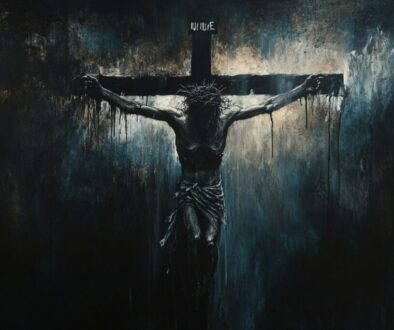
Purgatory – All Souls Day 2025 – Sermon by Father Levine
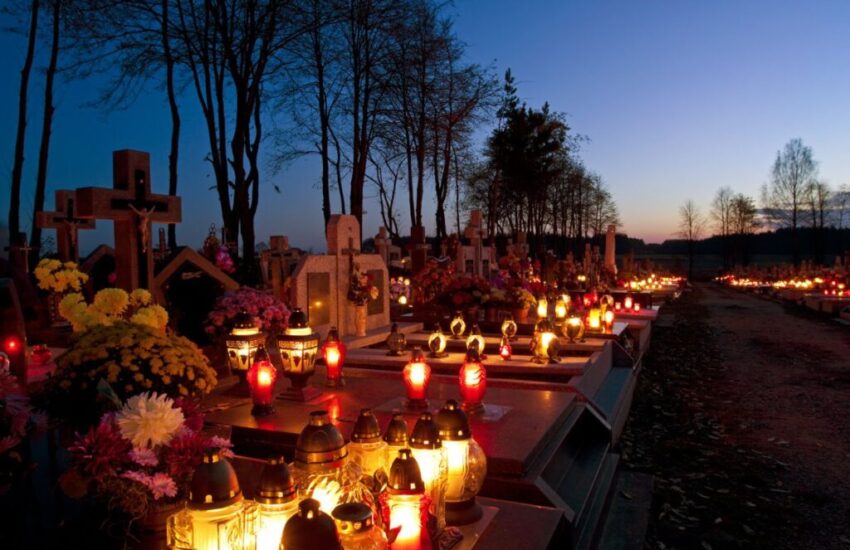
Fr. Joseph Levine; Holy Family Catholic Church and Missions, Burns, Oregon; November 2, 2025
Today is the commemoration of all the faithful departed, All Souls Day.
Who are they? What are we commemorating? They are not the saints in heaven, whom we honored yesterday on All Saints or All Hallows Day. They are most certainly not those condemned eternally in hell. They are the “holy souls” who departed this life in the grace and friendship of God, with their sins forgiven, but without having fully atoned for those sins. Another traditional way of putting it is that they left this world with a debt of temporal punishment for sin yet to be satisfied. They now make up in Purgatory for that which they failed to complete in this life.
Commemorating them we are reminded that we should assist them with our prayers, for they are no longer able to advance their own cause, as it were, but we are able to assist them by our prayers and penances and gaining of indulgences. This is a great work of charity.
We are also reminded that none but the pure of heart are admitted to the vision of God. We must be purified, if not in this life, then in purgatory. (cf. Mt 5:8; 1 Jn 3:2-3) It is said that the purification on this side of the grave is easier and it is also meritorious, as united to Christ we are able to fight against temptation, win the victory, and grow in grace and charity. Besides, we should aim for heaven, not purgatory. If you aim for purgatory and fall short that will not turn out well at all.
As for the souls in purgatory whom we remember today, in a little while, we will pray over the gifts, “Almighty and merciful God, by means of these sacrificial offerings, wash away, we pray, in the Blood of Christ, the sins of your departed servants.”
Offering the Holy Sacrifice of the Mass for the faithful departed is the greatest service we can render them, for we thereby apply the atoning power of the Blood of Christ in their favor.
The doctrine of purgatory is present but obscure in the sacred Scripture, but the word of God comes to us through both Scripture and Tradition, not Scripture alone. The doctrine of purgatory is made clear by the practice of the Church, because since the earliest days of the Church, the Mass has been offered for the living and the dead. The offering of prayer and sacrifice for the dead reaches back even to the Old Testament tradition. The Second Book of the Maccabees bears witness to this because it speaks of Judas Maccabeus ordering sacrifice to be made on behalf of some fallen soldiers; the sacred author comments: It is a holy and wholesome thought to pray for the dead that they may loosed from their sins. (2 Mc 12:46)
Close attention to today’s readings can help us also understand the condition of the faithful departed and their need for purification.
If we start with today’s 2nd reading we learn that baptism means being baptized into the death of Christ so as to share in his life. Yet that initial configuration to the death of Christ that takes place in baptism needs to be completed through the course of the Christian life. For if we have grown into union with him through a death like his, we shall also be united with him in the resurrection. After baptism, then, we need to grow continually in unity with Christ through conformity with his death.
What does this mean? We know that our old man was crucified with him, so that our sinful body might be done away with, that we might no longer be in slavery to sin. Or as St. Paul puts it elsewhere: Those who belong to Christ Jesus have crucified the flesh with its passions and desires. (Gal 5:24)
Baptism wipes away and completely atones for original and actual sin. Nevertheless, after baptism the soul still bears within herself the inheritance of sin in the disorder of passion and desire (this is what Scripture means by the “old man” or the “flesh”) that gives rise to continual temptations from within. That “old man” is like a traitor within the domestic household of the soul. Baptism nailed that “old man” to the cross as it were, making those disordered impulses subject to the sanctified mind by the grace of the Holy Spirit.
When, however, we sin after baptism, we let that “old man” down from the Cross. If the sin is mortal, the “old man” regains his dominion within us until we are delivered and forgiven through a complete, sincere, and humble confession. Even though we are forgiven in the confessional, we still need to work to atone for our sin in union with the Blood of Christ. Venial sin does not give dominion to the “old man” but it does allow him a more or less destructive holiday within the soul. That too leaves us with a work of atonement to accomplish.
Let’s think for a moment about sins of the tongue, perhaps the most widespread sins, ranging from small venial sins to mortal sins that disrupt and destroy lives. St. James speaks of the tongue as a blazing fire, kindled from hell, that can scarcely be controlled except by the grace of God. (cf. Jm 3:1-12) Jesus says, For every idle word that men shall speak, they shall give account thereof on the Day of Judgment. (Mt 12:36)
We are not talking here about destructive words, but idle words. Each of us, then, can reflect on how many times in our life, we have spoken without any good purpose, something that might not have been terribly harmful, it might have been something true, but neither did it need to be said, and we spoke merely to indulge our own pleasure or pride. We spoke just because it made us feel good. There is an idle word, for which we must give account, either atoning for our sin in this life or the next.
When we resist the temptations that arise within from the “flesh”, we continue the crucifixion of the flesh. That is a work that must continue until our body dies and along with the body the disorder of the “flesh”.
We might say that the death of the body is sufficient in itself for the complete atonement of any sins that have been forgiven as to their guilt, but that depends on the degree to which we indeed accept and even embrace our death in union with Christ. So, if during the course of this life we fail to complete the work of the crucifixion of the flesh, it will need to be completed for us in Purgatory; if in this life our configuration to the death of Christ is lacking in some measure, it will need to be completed in Purgatory. We can only share fully in the fruit of the resurrection after we have perfectly died with Christ.
Next, we turn to the 1st reading, which also sheds some light on the more positive aspects of Purgatory. The souls of the just are in the hands of God and no torment shall touch them.
The souls in Purgatory are already counted among the souls of the just because, even if their justice was far from perfect, they have died in the grace and friendship of God. It is the grace of God, sanctifying grace, that makes us to be just in the eyes of God and, in that regard, outweighs all our venial sins. If our works have any merit before God, it is because they have their root in sanctifying grace; it is because while we do them, they are more the work of the Holy Spirit. In any case, the souls in Purgatory might have been poor in good works that might atone for their sins, but on account of sanctifying grace, they are assured that they will never be touched by the torment of hell.
For ourselves, we have no such assurance. So long as we are in this life, we must work out our salvation with fear and trembling. (Ph 2:12) While we have confidence on account of God’s mercy, when we look to ourselves we see how easily we could betray the grace and mercy of God. We can have confidence that we are living in the grace of God if we are sincerely seeking to do his will, to please him, and are not conscious of any mortal sin that we have failed to confess. The confidence, however, is not certitude.
The Catechism of the Catholic Church explains: “Since it belongs to the supernatural order, grace escapes our experience and cannot be known except by faith. We cannot therefore rely on our feelings or our works to conclude that we are justified and saved.” (CCC 2005) We must then maintain “an attitude of trustful poverty. A pleasing illustration of this attitude is found in the reply of St. Joan of Arc to a question posed as a trap by her ecclesiastical judges: Asked if she knew that she was in God’s grace, she replied: ‘If I am not, may it please God to put me in it; if I am, may it please God to keep me there.’”(CCC 2005)
The souls in Purgatory have received a great blessing in the absolute assurance of their ultimate salvation; they are in peace because their will is now perfectly subject to God’s will and they know that they will, in due time, be admitted to the vision of God. Their chief suffering is precisely the delay in being admitted to that vision. They now know that they love him above all things, but they also know that the delay is due to their own fault, their negligence in atoning for their sins during the time given them in this life.
If there is one message that the souls in Purgatory would want to communicate to us it would be to advise us to make the most of the time given us in this life to know and love God and to do his will.
Nevertheless, while the gold of their offering is still being purified, the sacrificial offering of their life, in union with Christ, has been accepted by God, who has found them worthy of himself.
Their hope is full of immortality.
The hope immortality is completely fulfilled in the Blessed Virgin Mary, assumed body and soul into heaven. There may be some other saints who already have been given to share in the resurrection of the body. Yet, for the rest, the saints are blessed in the vision of God, but they themselves are not complete, because they are missing their bodies, which yet lie in the dust.
In today’s Gospel Jesus says, This is the will of the one who sent me, that I should not lose anything of what he gave me, but that I should raise it on the last day. The souls in purgatory will not be lost, but together with the saints in heaven they also are waiting to be raised up on the last day, the day on which purgatory will be emptied of any souls that remain, the day when by the mighty power of God all the bodies of the dead will be raised, the day of the last judgement, the day when those who are in the tombs will hear the voice [of the Son of God] and come forth, those who have done good, to the resurrection of life, and those who have done evil, to the resurrection of judgment. (Jn 5:28-29)
May the Lord in his mercy set us on his right hand on that day.
Seek a Deeper Connection with God and Join Lay Cistercians of South Florida
Lay Cistercians of South Florida, is a community of lay people who seeks to have a deeper connection with God by living a life inspired by the monks and nuns through Lay Monasticism. Learn more about what is a Lay Cistercian on our website. Anyone who aspires to do the same as us, and is a confirmed Catholic is welcome to join us! We meet every second Saturday of the month at Emmanuel Catholic Church in Delray Beach, Florida.

This Content Has Been Reviewed For Accuracy
This content has undergone comprehensive fact-checking by our dedicated team of experts. Discover additional information about the rigorous editorial standards we adhere to on our website.