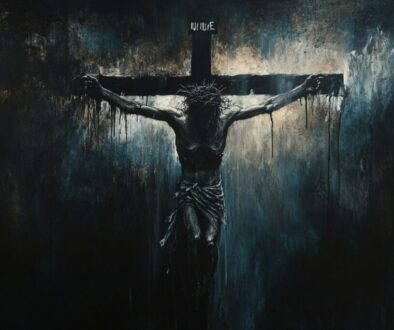
The Richly Woven Tapestry of Christ and His Church – Dedication of Lateran Basilica – Sermon by Father Levine

Fr. Joseph Levine; Holy Family Catholic Church and Missions, Burns, Oregon; November 9, 2025
Today we celebrate the Feast of the Dedication of St. John Lateran in Rome. This church, not St. Peter’s in the Vatican, is from ancient times the Pope’s Cathedral and so the chief church in the Catholic world, the only “archbasilica”, the “mother and head of all the churches.” The chief title is actually that of the Most Holy Savior, but St. John the Baptist and St. John the Evangelist, are both secondary titles. The name “Lateran” is from the ancient Roman family to whom the original palace on the site belonged. The Emperor Constantine donated the palace to the Church, which became the Papal residence until the late Middle Ages; the basilica was built adjoining the palace.
The celebration is rich and multifaceted. The archbasilica itself is the embodiment of all the Catholic churches spread throughout the world and so also the embodied symbol of the whole Catholic Church, the mystical Body of Christ and at the same time the Bride of Christ. The church building, as a physical, visible reality is more than a mere symbol; it is the physical, visible presence of the reality which is the Church of Jesus Christ. This calls us to reflect on various relations between the visible and invisible that are involved both in Christ and his Church.
Before, however, I try to unfold some of the richness of the reality and symbolism, I should say a word about the importance of the simple fact of the visible Church that Christ founded, the Catholic Church. Present in the world today, the human reality can seem somewhat messy, unimpressive, weak, and even corrupt. Apart from the corrupt, so it was with Christ on the Cross; the corrupt part means that the sins of Catholics contribute to the Church appearing as Christ crucified.
Nevertheless, it is that same visible human reality of the Church that is our link to Jesus Christ in his earthly life 2,000 years ago. When we accept and embrace the visible historical reality of the Catholic Church, we affirm, in effect, that Jesus Christ, seated at the right hand of the Father, has been able, by the power of the Holy Spirit that he has given to his Church, to preserve intact his message and his salvation through human history until this day. The visible Church, inseparable from Christ, is the guarantee of access to Christ and his teaching. The visible Church ensures that we are able to embrace the word of God, not as the word of men, but as what it really is, the word of God, at work in those who believe. (1 Th 2:13)
With that, let us try to understand some of the invisible riches found in the visible reality of the Church that Christ has given to us.
If we start with Jesus Christ, he is the Son of God made man, one divine person, the 2nd person of the Blessed Trinity, with two natures, divine and human.
The ancient Creed, called the “Athanasian Creed”, which is we could say is the third greatest creed after the Nicene Creed, we use at Mass, and the Apostles Creed we use when we pray the rosary, says of Christ, “He is perfect God; and he is perfect man, with a rational soul and human flesh … He is one not by a mingling of substances but by unity of Person. As a rational soul and flesh are one man, so God and man are one Christ.”
What I want to highlight here is the analogy between God and man in Christ and soul and body in man; in both cases, there is an invisible element that is made present through its unity with the visible. The invisible God is made present and visible through the man Jesus Christ, who is the Son of God. The invisible rational soul is made present and visible through the body which it animates. Christ is one divine person, God and man; an ordinary man is one human person, body and soul.
Next, let us consider two closely related Old Testament realities that precede the Church: the ancient city of Jerusalem and the Temple within the City. The city was a visible reality with walls and buildings, inhabited by human beings; the Temple was a visible structure, with the temple proper, in which the priests served, its courtyards, in which the people entered to worship and pray, and set off from the surrounding city by walls, with gates through which the people could enter.
The dwellers of the city individually were visible, but as a unity, as a people, the people of Jerusalem, they were not altogether visible. There are many things that bound that people together in a unity, but the visible city walls, within which they dwelt, set them apart as a visible unity. Further, as the people of the city, they represent the whole people of Israel, the people of God, even those who live outside the city proper. So, the visible Jerusalem was the city of God in which the people of God dwelt. The people are a bit like the soul that animates the visible body of the city.
They were the people of God, set apart for the worship of God in the Temple of God, which no longer exists, found within the city. As for the Temple, the whole concept of a “temple” is that of God’s dwelling place among men, where he is worshipped. So, the visible temple represented and made present God himself, dwelling in the midst of his people. We could compare the visible temple building with the presence of God dwelling therein to Christ’s sacred humanity, inhabited by his divinity.
St. John, in the prologue to his Gospel, evoked this relation with the famous words, the Word was made flesh and dwelt among us. (Jn 1:14) This is made even more explicit by Jesus’ words in today’s Gospel, Destroy this temple and in three days I will raise it up, referring to the temple of his Body.
Now, if we move to church buildings, the chief of which is St. John Lateran, they embody the symbolism both of Jerusalem and the Temple.
The Catholic Church is the new city of God and the new people of God to which we belong as members. That is so even when we are scattered about the world and its parts, pursuing our proper occupations, like the people of Israel outside of Jerusalem. We are united by the same faith professed; the same sacraments; and the same hierarchical government under the Pope. Yet, when we are gathered in the church building, the building makes us visible as a people, a people belonging to God, to whom the church is dedicated, by whom it is sanctified.
The Catholic Church, as the mystical Body of Christ, is also the new Temple, in which God dwells. He dwells in the Church by dwelling in us individually through sanctifying grace. Through baptism our bodies were each consecrated and set aside as dwelling places of God. The same Holy Spirit, who dwells in us individually, and the same Body of Christ, that we each receive in Holy Communion, make us all together to be one Body of Christ, rendered visible by the church building, in which Christ himself dwells bodily, through the Holy Eucharist, in the tabernacle.
Now, the Catholic Church is at the same time the Body of Christ and the Bride of Christ, as St. Paul writes: The two shall become one flesh; this is a great mystery, and I mean in reference to Christ and his Church. (Eph 5:31-32)
The same reality that is found in Christ himself is found in the whole Church, is found in each of the faithful, and is embodied and represented by the church building. This reality of the great in the small and the small in the great means that the least thing we do in the grace of God, for the love of Christ, becomes a vital thread in the whole tapestry of Christ and his Church, part of the great love story between the divine Bridegroom and his Bride. (cf. Rev 19:8)
You are God’s building. The whole Church is God’s building or temple, represented by physical building, but the same reality belongs to us individually if we are living in the grace of God and the Holy Spirit dwells within us. Together and individually we are God’s building, God’s temple, built upon the foundation stone of Jesus Christ.
Elsewhere, we are spoken of as living stones, built into the cornerstone, meaning that the pattern and reality of Christ is to be repeated in us. Come to him, to that living stone, rejected by men but in God’s sight chosen and precious; and like living stones be yourselves built into a spiritual house, to be a holy priesthood, to offer spiritual sacrifices acceptable to God through Jesus Christ. (1 Pe 2:4-5) This is Jesus Christ, High Priest and Lamb of God, who, today, in visible fashion, through the ministry of the priests, continually offers himself anew and is offered on the altar of the Holy Sacrifice of the Mass.
The 1st reading speaks to us of the life-giving water flowing from the threshold of the Temple. This water makes the dead, salt waters, to become fresh and full of life. The life-giving water was visibly represented when Jesus died on the Cross and a soldier came with a lance, pierced his side, and blood and water flowed forth. (cf. Jn 19:34)
The water represents both the divine person of the Holy Spirit, who proceeds from the Father and the Son, and also the life of the grace, which is the work of the Holy Spirit in us, which makes us to be true children of God in Christ. (cf. Jn 7:39) This is the river that gladdens the city of God, the holy dwelling of the most High. When this river enters into us, then by our life and by our words, under the guidance of the Holy Spirit, the words of Jesus are fulfilled, Out of his heart shall flow rivers of living water. (Jn 7:38)
The salt waters, like tears, represent human life, without the grace of God, nothing but a vale of tears, enslaved to sin and destined to death. In the Church, the life-giving waters of grace flow in abundance, transforming human life, freeing us from sin, and giving us the promise of immortality and the resurrection of the body.
All this is found in the reality of the one, holy, catholic, and apostolic Church. Yet, so long as we remain in this life, the salt waters also remain, the inheritance of sin also remains. Our bodies have been consecrated as temples by baptism, but if we fall into mortal sin, the temple is desecrated and becomes an empty shell. So also, the church building is set aside as a place of worship, in which Christ dwells in the Eucharist and the holy sacrifice of the Mass is offered. Alas, church buildings too can be desecrated, not just by violence brought in from the outside, but by the sin, irreverence, and sacrilege of the worshippers.
God has entrusted to us the precious treasure of his grace; he has entrusted us this treasure in frail earthen vessels. (cf. 2 Cor 4:7) He has entrusted frail men with his teaching and his sacraments. That means that out of love for us he continually exposes himself to abuse by ungrateful sinful men, just as Christ exposed his Body to abuse upon the Cross.
So the warning of Christ in today’s Gospel stands: Stop making my Father’s house a marketplace. Do not pollute the temple of God by sin. Do not pollute the Catholic Church of which you are members, do not pollute the building in which you worship, do not pollute the body and soul that have been consecrated by baptism.
We belong to God, our lives should be wholly surrendered to God; everything in our life should be order to and governed by God, without conditions. We have been told, Be holy, for I, the Lord your God am holy. (Lev 19:2; 1 Pe 1:16)
Seek a Deeper Connection with God and Join Lay Cistercians of South Florida
Lay Cistercians of South Florida, is a community of lay people who seeks to have a deeper connection with God by living a life inspired by the monks and nuns through Lay Monasticism. Learn more about what is a Lay Cistercian on our website. Anyone who aspires to do the same as us, and is a confirmed Catholic is welcome to join us! We meet every second Saturday of the month at Emmanuel Catholic Church in Delray Beach, Florida.

This Content Has Been Reviewed For Accuracy
This content has undergone comprehensive fact-checking by our dedicated team of experts. Discover additional information about the rigorous editorial standards we adhere to on our website.