The Sacrificial Mercy of the Cross – Sermon by Father Levine
Fr. Joseph Levine; Holy Family Catholic Church, Burns, Oregon; April 3, 2026
St. John, in recounting the Passion of Christ, makes very clear, from start to finish, who it is that is giving his life for us: the Son of God, the Word made flesh, the Good Shepherd, who freely lays down his life for us, so as to take it up again in the resurrection. (cf. Jn 10:17-18)
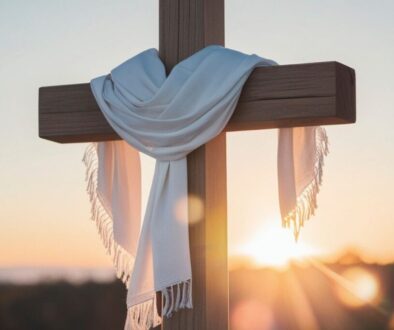
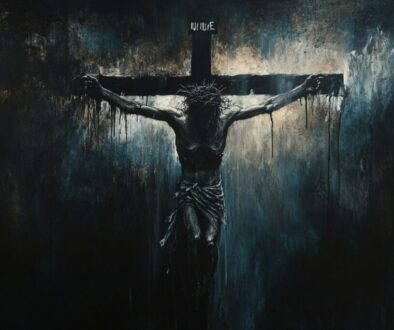
As our great high priest, Jesus freely offered himself, his life, shedding his blood, on the Cross, as the sacrifice of our salvation. He died for us, so it was vain for Peter to think that he could die for Christ, or defend him by the sword; he died for us, so it was impossible that Pilate, by his vain attempts at human political manipulation, could set Christ free. Jesus’ death, the death of the Son of God, was necessary for our salvation. When we look upon the Cross, we need to remember, each one, “I needed him, the Son of God, to do that for me.”
By his wounds we have been healed. (1 Pe 2:24; Is 53:5) When we contemplate the suffering of Christ, we witness the greatest trauma. All you who pass by the way, look and see if there is any sorrow like to my sorrow. (Lam 1:12) Yet, Christ’s trauma does not destroy him because it is transformed within his sacred Heart and becomes a sacrifice and gift to God. His divine nature does not diminish the trauma but rather gives the strength to bear what was far beyond human strength. When we learn to unite our sufferings to his – this might be the most important lesson of all – we receive from his strength, and our suffering too becomes a sacrifice and gift to God. Through becoming a sacrifice, our trauma is not removed, but it is transformed. It will then appear, transfigured, like Christ’s glorious wounds on the day of the Resurrection.
The transforming and life-giving power of Christ’s wounds touch us through the sacraments of the Church, most of all through baptism and the holy Eucharist.
After his death, as we heard today, the soldier came and pierced his side with a lance, and blood and water flowed out. The blood and water that flowed from his wounded side on the Cross speak of the effect of Jesus’ death and how his death reaches our lives with its transforming and life-giving power. The united witness of the Fathers of the Church, east and west, testifies to the truth.
In the West, St. Augustine (died 430AD) writes of this blood and water: “At the beginning of the human race, the woman was made of a rib taken from the side of the man while he slept; for it seemed fit that even then Christ and his Church should be foreshadowed in this event. For that sleep of the man was the death of Christ on the Cross, whose side, as he hung lifeless upon the Cross, was pierced with a spear, and there flowed from it blood and water, and these we know to be the sacraments by which the Church is ‘built up’.” (City of God, Bk XXII.17)
And in the east, St. John Chrysostom (died 407AD): “The gospel records that when Christ was dead, a soldier came and pierced his side with a lance and immediately there poured out water and blood. Now the water was a symbol of baptism and the blood of the holy Eucharist. The soldier pierced the Lord’s side, he breached the wall of the temple, and I have found the treasure and made it my own. … from these two sacraments the Church is born: from baptism, the cleansing water that gives rebirth and renewal through the Holy Spirit, and from the holy Eucharist. Since the symbols of baptism and Eucharist flowed from his side, it was from his side that Christ fashioned the Church, as he has fashioned Eve from the side of Adam.” (Liturgy of the Hours, Office of Readings for Good Friday)
It is most significant, then, that after the resurrection, Christ bears the marks of his wounds, including the wound in his side, transformed and glorious, and shows them to his Apostles. Likewise, he carries them with him when he ascends to heaven and shows them to his Father as an offering on our behalf.
When Christ appeared as the high priest of the good things that have come, then through the greater and more perfect tent (not made with hands, that is, not of this creation) he entered once for all into the Holy Place, taking not the blood of goats and calves but his own blood, thus securing an eternal redemption. (He 9:11-12)
The image of this reality is shown to us in the image of Divine Mercy, the novena of which begins today, in which the blood and water is transformed into rays of light, signifying the healing and saving grace that comes to us through the sacraments, healing and saving by making us to become like Christ, sharing in his sacrificial death, so as to share in his resurrection.
Seek a Deeper Connection with God and Join Lay Cistercians of South Florida
Lay Cistercians of South Florida, is a community of lay people who seeks to have a deeper connection with God by living a life inspired by the monks and nuns through Lay Monasticism. Learn more about what is a Lay Cistercian on our website. Anyone who aspires to do the same as us, and is a confirmed Catholic is welcome to join us! We meet every second Saturday of the month at Emmanuel Catholic Church in Delray Beach, Florida.

This Content Has Been Reviewed For Accuracy
This content has undergone comprehensive fact-checking by our dedicated team of experts. Discover additional information about the rigorous editorial standards we adhere to on our website.