On This Rock I Will Build My Church – Sermon by Father Levine
Fr. Joseph Levine; Holy Family Catholic Church and Missions, Burns, Oregon; August 23, 2026
Oh, the depth of the riches and wisdom and knowledge of God! How inscrutable are his judgments and how unsearchable his ways! For who has known the mind of the Lord or who has been his counselor? Or who has given the Lord anything that he may be repaid? For from him and through him and for him are all things. To him be glory forever. Amen.
With these words of today’s 2nd reading I take up where I left off with last Sunday’s homily on the mystery of Jew and Gentile, which mystery is bound up with the relation between the Old Testament and the New.
God, in his providential design, arranged for the separation of Jew from Gentile, so that he could begin his work of salvation by focusing on one people among all the nations of the earth, instructing them in his ways and teaching them to await his promised salvation, a salvation that would be not just for the people first chosen, but for all the earth. In a nutshell, that is the message of the Old Testament. The New Testament speaks to us of the fulfillment in Jesus Christ.
St. Paul writes, Christ is the end of the law for the justification of all who believe. (Rm 10:10) Christ is the end who brings the law of Moses to its temporal termination, to its goal, and to its fulfillment. Christ fulfills all the promises of God in terms of people, land, temple, and kingdom.
In all this, God does not just work for our salvation but also reveals something of the depth of the riches of his wisdom and knowledge, otherwise far beyond our grasp. To this, we should respond with admiration, delight, gratitude, and praise – To him be glory forever.
Indeed, our salvation will be complete when, beholding his glory, we are made capable of giving him glory forever in the heavenly kingdom.
Now, the Old Testament does not just prepare for the New by going before and announcing the coming of Christ. It is not like a scaffold that can be dispensed with once the building is complete. Rather, when he instructs the people of Israel, God uses language that prepares us to understand the language of Jesus Christ; he also shows forth a pattern in his work that will appear in a new and higher way in the Church of Jesus Christ. At the same time, the pattern revealed in ancient Israel and brought to fulfillment in the Church, also points us to and gives us a distant glimpse of the completion of God’s plan in the heavenly Jerusalem.
Indeed, Jerusalem itself, as the capital of the Kingdom of David and Solomon, is a symbol of the Church, a symbol also of the life of the Christian soul, and a symbol of the heavenly Jerusalem. The Catechism of the Catholic Church, rooted in ancient tradition, refers to these different meanings of a single scriptural reality, in this case Jerusalem, as the literal, allegorical, moral, and anagogical senses of Scripture, all of which are anchored in the literal sense. (CCC 114) The different senses of Scripture reveal to us something of the depth of the riches and wisdom and knowledge of God.
Since Jerusalem is a symbol of the Church, that means that the priesthood and sacrificial worship of the Jerusalem temple symbolize not only the priesthood and sacrifice of Christ, but also the priesthood and sacramental worship of the Church, which enables us to share in Christ’s priesthood and sacrificial worship.
Now the Church, the mystical Body of Christ, is the same as the Church to which Jesus refers to in today’s Gospel, saying, On this rock I will build my Church, and the gates of hell shall not prevail against it.
Let us now turn to the Gospel and view the whole in relation to the Old Testament preparation. Jesus asks his Apostles, Who do you say that I am?
Now many people have observed that it seems a rather strange question. He is certainly not some modern man, in doubt of his identity, and searching for himself, wondering, “Who am I?” Nor is he some celebrity arguing with the front desk clerk at the hotel, who has no record of his reservation, saying, “Don’t you know who I am?”
Yet, in the context in which Jesus asked the question it was perhaps not so strange. Earlier, a delegation from the authorities in Jerusalem had asked St. John the Baptist, Who are you? (Jn 1:19) They wanted to know who he was in terms of the Jewish expectation of salvation. Was he the Messiah? Elijah? The Prophet? He was none of these, but just a voice crying in the wilderness, announced by the prophet Isaiah, calling attention to the greater one who comes after. (Jn 1:23, 26-27)
When Jesus asks his Apostles, Who do you say that I am, his question is like the one the authorities put to St. John the Baptist. The Old Testament had prepared the whole people to expect someone, the Messiah, or Elijah, or the Prophet. St. John the Baptist had taught them to expect the one to come after him. Jesus’ teaching and action had raised the question in people’s minds. Is he the one who is to come? (cf. Mt 11:3) Like a good teacher, he doesn’t give away answers.
St. Peter’s answer is given in the language of Old Testament prophecy. The Christ, the Messiah, or the Anointed One, refers especially to God’s promise to David, who was the anointed king of Israel: he was a christ and a sign of the Christ to come. Through the prophet Nathan, God had promised David, When your days are fulfilled and you lie down with your fathers, I will raise up your offspring after you, who shall come forth from your body, and I will establish his kingdom. He shall build a house for my name, and I will establish the throne of his kingdom forever. I will be his father, and he shall be my son. (1 Sam 7:12-14) David had a son, Solomon, who built a house for God’s name, but Solomon’s kingdom did not last forever. So, the Angel Gabriel refers to this same promise when he says to the Virgin Mary, Behold, you will conceive in your womb and bear a son, and you shall call his name Jesus. He will be great, and will be called the Son of the Most High, and the Lord God will give him the throne of his father David, and he will reign over the house of Jacob; and of his kingdom there will be no end. (Lk 1:31-33)
Now, I would say that David understood what was meant by I will be his father, and he shall be my son. Even more, the Virgin Mary understood the meaning of he will be called the Son of the Most High. Nevertheless, the common understanding among the Jewish people, even among the most learned Rabbis, was not that the Messiah would be the very Son of God made man, but simply that he would a man who would enjoy such an intimate relation to God that it could be likened to the relation of a son to his father. That is why, to this day, Jews can read their Bible, our Old Testament, and reject Christ. The expression that seems clear to Christian faith remains ambiguous, apart from the light of faith. As a general principle, God reveals himself with sufficient clarity that we can receive his light and give him a free and reasonable assent of faith, but not with such clarity as to compel our faith.
Jesus said to Peter, Flesh and blood did not reveal this to you, but my heavenly Father. Earlier he had said, No one knows the Son except the Father. (Mt 11:27) So, for the Father to reveal Jesus as the Son of God is for the Father to share his own knowledge of his only Son. St. Peter received and accepted this higher light and so he professed, with full meaning, You are the Christ, the Son of the living God. He understood that Jesus was not only the Messiah, but also the very Son of God, eternally begotten of the Father, who has become man for our salvation – though he was not yet so clear on the means of salvation.
In what follows, Jesus will make clear that he will accomplish this salvation through his death – something that was not very pleasing to Peter – and resurrection, giving to Peter, James, and John a foretaste of the resurrection in his glorious transfiguration. (cf. Mt 16:21-17:13)
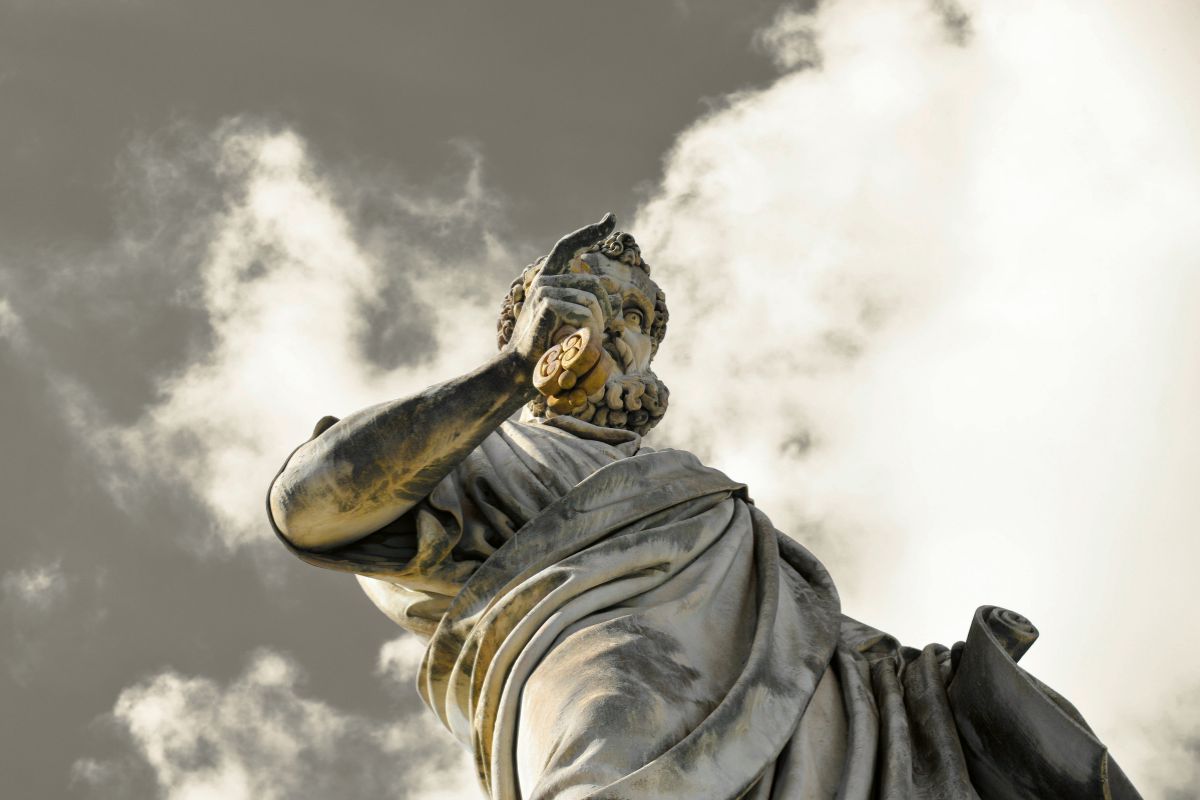
Continuing with today’s Gospel, Jesus gives to Peter the keys of the kingdom of heaven. Our 1st reading today teaches us that Jesus’ words were not invented out of thin air but refer to the Old Testament and must be understood in that context. The prophecy of Isaiah speaks of an office in Kingdom of Judah, the house of David, the Master of the Palace. He would have been the highest royal official, like the prime minister; he would have been the administrator who oversaw the day-to-day affairs of the kingdom. The prophecy announces that one historical Master of the Palace will be deposed for his infidelity, while another will be put in his place. He will receive the key of the house of David … when he opens no one shall shut, when he shuts, no one will open. The key is the badge of office, the sign of his plenipotentiary status.
Jesus refers the history of the house of David to his Church. The Church is thereby revealed as the fulfillment of the Davidic kingdom, in which there will be an office, the papacy, that corresponds to the Davidic “Master of the Palace.”
In the Book of Revelation, Jesus identifies himself as the holy one, the true, who has the key of David, who opens and no one shall shut, and who shuts and no one opens. (Rev 3:7) That means when he bestows the key on Peter, he is not emptying out his own authority but giving to Peter and his successors, the Popes, to share in his authority.
In Christ, the kingdom of David becomes the eternal heavenly kingdom and entrance into that kingdom involves the forgiveness of sins, which takes place through baptism, (cf. Jn 3:3-8) so the keys signify, in the first place, the power of forgiveness. (Cf. Jn 20:22-23)
Again, in the Book of Revelation, Christ says, I am the living one; I died, and behold I am alive forever, and I have the keys of death and hell. (Rev 1:18) The forgiveness of sins gives us entrance into the life of grace, delivering us from hell, and giving us already to share in Christ’s victory over death.
St. Peter, and his successors, exercise the heavenly power of Christ in his Church upon earth, which is revealed as the fulfillment of the Davidic kingdom. The heavenly kingdom is made present and visible on the earth through the sacraments.
But why does Christ speak of his “Church”?
If someone were to read the Bible, in English (with the exception of the old Catholic translation, the Douay-Rheims), starting with Genesis and going straight through to the Book of Revelation, he would not encounter the word “church” until he reached the New Testament. Indeed, he would first encounter the word in today’s Gospel passage. From that perspective the words seems to appear out of thin air.
Nevertheless, the word “church” translates the Greek ekklesia, which appears frequently in the Septuagint, which is the ancient Greek version of the Old Testament, already in use in the time of Christ; there the word refers to the assembly of the people of Israel standing before God. (cf. CCC 751-752) That Greek word frequently translates the Hebrew qahal, which in a unique way is applied by Moses, in Deuteronomy, to the assembly of the people who stood before God at Mt. Horeb, that is Mt. Sinai, and heard God himself speaking the ten commandments. (cf. Dt 5:22, 9:10, 10:4, 18:16, Acts 7:38). They are the people who are constituted by hearing the word of God and who hearing the word of God are brought by him into a covenant, sealed with a sacrifice, proclaimed by Moses, Behold the blood of the covenant which the Lord has made with you in accordance with all these words. (Ex 24:8)
Jesus says to St. Peter, Upon this rock I will build my Church. This is the Church of the Son of God made man, into which we enter through baptism. This is the assembly of the new people of God, standing before him, constituted by hearing his word and joined to God in his covenant, by the Blood of his covenant, the new and eternal covenant, offered on the Cross and offered in the Holy Sacrifice of the Mass. The Church is most herself in the Holy Sacrifice of the Mass where, as members of the covenant people, we hear the word of God and offer the Holy Sacrifice. (cf. SC 2,10)
The gates of hell shall not prevail against St. Peter and his successors, who profess and preserve the truth faith, You are the Christ, the Son of the living God, and all that it entails. The gates of hell shall not prevail against the Church of the new and eternal covenant. The gates of hell shall not prevail against the Holy Sacrifice of the Mass.
Glory be to the Father, and to the Son, and to the Holy Spirit, one God; to God be glory forever. Amen.
Seek a Deeper Connection with God and Join Lay Cistercians of South Florida
Lay Cistercians of South Florida, is a community of lay people who seeks to have a deeper connection with God by living a life inspired by the monks and nuns through Lay Monasticism. Learn more about what is a Lay Cistercian on our website. Anyone who aspires to do the same as us, and is a confirmed Catholic is welcome to join us! We meet every second Saturday of the month at Emmanuel Catholic Church in Delray Beach, Florida.

This Content Has Been Reviewed For Accuracy
This content has undergone comprehensive fact-checking by our dedicated team of experts. Discover additional information about the rigorous editorial standards we adhere to on our website.