Those Whom God Has Tried And Found Worthy Of Himself – Sermon by Father Levine
Fr. Joseph Levine; Holy Family Catholic Church and Missions, Burns, Oregon; June 21, 2026
The prophet Jeremiah calls upon God, saying, O Lord of hosts, you who test the just, who probe mind and heart. That means that if we are to be just in the eyes of God, and we cannot be saved unless we are just, then we must submit to his testing, and that is something we might be little inclined to do.
In today’s Gospel, Jesus would give us courage, hope, and confidence, in undergoing God’s “testing” when he says, Fear no one. Nothing is concealed that will not be revealed, nor secret that will not be known … do not be afraid of those who kill the body … Do not be afraid; you are worth more than many sparrows.
There are two sides of God’s knowledge involved here: first, nothing escapes his knowledge, nothing is hidden from him, and we are therefore answerable to him; second, his knowledge is loving and providential; by his knowledge, he guides us and cares for us and would lead us to salvation.
So what does it mean to be “tested” by God?
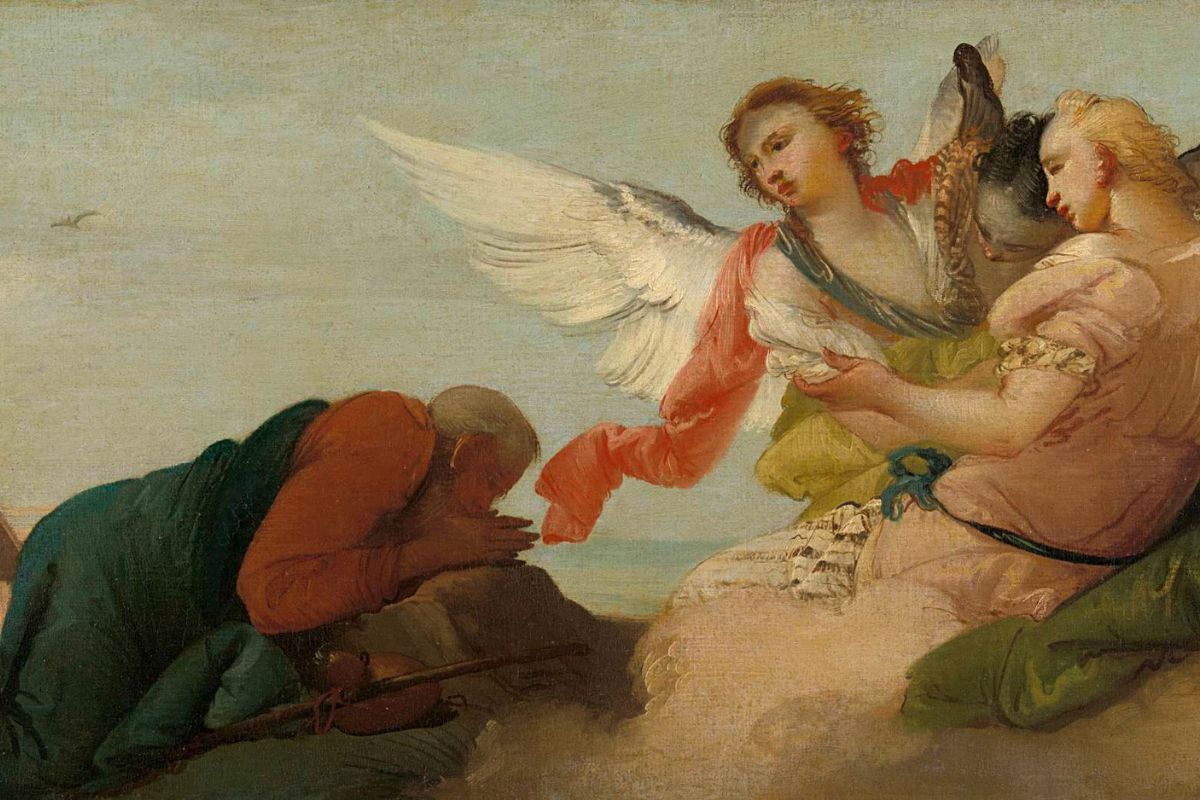
God put Abraham to the test, a very severe test indeed, one that we find shocking and are tempted to explain away. Well, I will not enter into the details of that test today, rather I want to go to the conclusion of the test when God said to Abraham, Do not lay your hand on the lad or do anything to him; for now I know that you fear God, seeing you have not withheld your son, your only son from me. (Gen 22:12)
These words are almost more shocking than the test itself. It might give the impression that God was in doubt, wondering to himself, “Does Abraham really love and honor me? Or does he just act the way he does because of the blessings I bestow on him? I know what I will do, I will ask him to give up the greatest blessing I have given him, his only son, then I will know.” And if one man treated another man like that, it would be cruel indeed.
Yet, here we are speaking not of man, but of God, God who knows all things, from whom nothing is hidden, not even the depths of the human heart. So, how is it that after the test, God says, Now I know that you fear God, as though he had just learned something he did not know before?
Then, there is the book of Job, which portrays God as boasting of Job’s righteousness to Satan, then when Satan challenges God, affirming that Job only serves God because of the blessings he received, God allows Satan to put him to the test. (cf. Job 1-2) Again, if we understand the imagery according to how one man might treat another, God comes across as cruel and callous, delivering Job into the hands of Satan, in order to prove a point. Yet, at the end of the book, Satan has disappeared, while Job is vindicated in the presence of his friends who had been accusing him of sin; he has come to a deeper knowledge of God, such as he never had before, in that knowledge, he is blessed, and even his material fortune is restored. (cf. Job 42) We see that it is not that God has learned anything, nor is it about proving a point to Satan, rather it is Job who has come to know himself and God.
Likewise, St. Augustine will say that when God says to Abraham, Now I know that you fear God, it is a way of speaking that Scripture has that really means, “Now I have made you to know that you do indeed fear God.” It is not God who learns something when he puts Abraham to the test, but Abraham who comes to know himself, and knowing himself, comes to know God. It is as St Augustine prayed, “God, always the same, let me know myself, let me know You.” (Soliloquies, II.1) To pray thus is to ask to be put to the test by God.
Along these lines, the Psalmist prays, Prove me, O Lord, and try me; test my heart and my mind. For thy mercy is before my eyes, and I walk in faithfulness to thee. (Ps 26[25]:2)
Still, we might wonder, if the testing of Abraham is for Abraham’s sake, that he might know himself and know God, why does God speak as though he were the one doing the learning?
There is something very important here about Scripture, as the word of God, that we need to grasp. God has one Word, his Son, that he speaks in eternity. In heaven, if we make it there, we will hear that Word, as it is spoken, and behold the speaker, as he is in himself. What we call the “word of God” in Scripture is an echo, as it were, of the eternal Word, conveyed to us in human language, proportioned to our way of thinking. It is a true word; it is a complete word; it is the word that we need to guide us to the goal God has prepared for us; yet it is a word that falls as far short of the reality as a creature falls short of the creator. What is that distance? The Church teaches: “Between Creator and creature no similitude can be expressed without implying an even greater dissimilitude” (4th Lateran Council, cited in CCC 43)
Let us consider another example. Before the flood, Scripture tells us that God sees the wickedness of man on earth and repents of having made man, and so chooses to destroy man from the earth, sparing only Noah. (cf. Gen 6:5-8) That is a human way of speaking that refers rather to the effects of the divine action on man than the interior reality of God’s unchanging mind and will. As a man, in anger and sorrow, might change from treating another man well to treating him badly, and the other man experiences first the good treatment, then the bad, so the life of man on earth experienced the material blessing of God before the flood, then the destruction of the flood. Elsewhere, though, the Scriptures direct our minds beyond the imaginative conception when it says of God, God is not man, that he should lie, or a son of man, that he should repent. (Nm 23:19) And St. James tells us that Every good endowment and every perfect gift is from above, coming down from the Father of lights with whom there is no variation or shadow due to change. (Jm 1:17)
So now, we return to God’s testing of his faithful, that they might come to know themselves and, in knowing themselves, know God at work in them.
When God allows a person to be tempted to sin and the person prevails, he learns by experience both the help of God in overcoming the temptation and that he loves God more than whatever enticed him to sin; if he succumbs to the temptation, but then repents and confesses his sin, he learns God’s mercy and his own native weakness without God’s help. So also, when a person remains faithful to God in the midst of affliction, hardship, and misfortune, such as a grievous illness, loss of a job, false accusations that harm his reputation, or outright persecution because of his faith. He not only learns the presence of God in the midst of these hardships, but the communion in the sufferings of Christ, which brings also communion in his consolation. (cf. 2 Cor 1:5)
Yet, we are put to the test not only in the temptations to sin and suffering of hardship, but also in prosperity and consolation. While there is the man who serves God while things are going well for him and then falls away in the midst of affliction, as the seed sown in rocky soil withers beneath the heat of the sun, there is also the person who serves God in affliction, but then forgets him in the midst of prosperity, attributing his success to himself, and so is like the seed sown amidst the thorns, whose growth is choked by worldly cares and preoccupations. (Cf. Mt 13:1-9,18-23) Likewise, there is the person who turns to God in prayer when things are difficult, but forgets him when things are going well; there is also the person who prays when he experiences the consolation of God and delight in prayer, but abandons prayer when prayer seems to him dry and lifeless.
So St. Paul, having experienced the various trials of God, wrote, I have learned, in whatever state I am, to be content. I know how to be abased, and I know how to abound; in any and all circumstances I have learned the secret of facing plenty and hunger, abundance and want. I can do all things in him who strengthens me. (Phil 4:11-13)
In these words, we glimpse the deep interior peace, already tasted in this life, that is the fruit of submitting to the trials of God.
And St. Peter writes: You rejoice, though now for a little while you may have to suffer various trials, so that the genuineness of your faith, more precious than gold which though perishable is tested by fire, may redound to praise and glory and honor at the revelation of Jesus Christ. (1 Pe 1:6-7)
When Christ appears, St. Paul writes, we will appear with him in glory. (Col 3:4)
When we submit to God’s trials, we are submitting to the workmanship of our Creator; we are letting him fashion us according to his plan; and his plan for us is something great and worthy of himself. What is great and worthy of God? Isn’t that something we should desire?
In everything God works for good with those who love him, who are called according to his purpose; for those whom he foreknew he also predestined to be conformed to the image of his Son, in order that he might be the first born among many brethren. That is great and worthy of God. And those whom he predestined he also called; and those he called he also justified; and those whom he justified he also glorified. (Rm 8:28-30)
These are the ones whom God has tried and found worthy of himself. (Wis 3:5)
Is that what we want? Perhaps we get discouraged in the midst of God’s trials. Well, God does not give up on us; neither should we give up on God.
Seek a Deeper Connection with God and Join Lay Cistercians of South Florida
Lay Cistercians of South Florida, is a community of lay people who seeks to have a deeper connection with God by living a life inspired by the monks and nuns through Lay Monasticism. Learn more about what is a Lay Cistercian on our website. Anyone who aspires to do the same as us, and is a confirmed Catholic is welcome to join us! We meet every second Saturday of the month at Emmanuel Catholic Church in Delray Beach, Florida.

This Content Has Been Reviewed For Accuracy
This content has undergone comprehensive fact-checking by our dedicated team of experts. Discover additional information about the rigorous editorial standards we adhere to on our website.