What is Life? – Sermon by Father Levine
Fr. Joseph Levine; Holy Family Catholic Church and Missions, Burns, Oregon; June 7, 2026
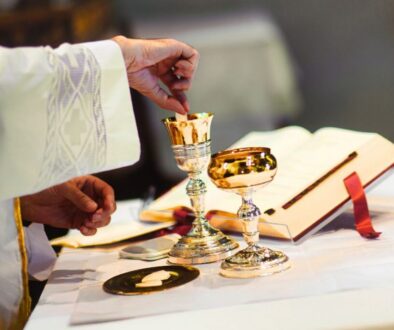
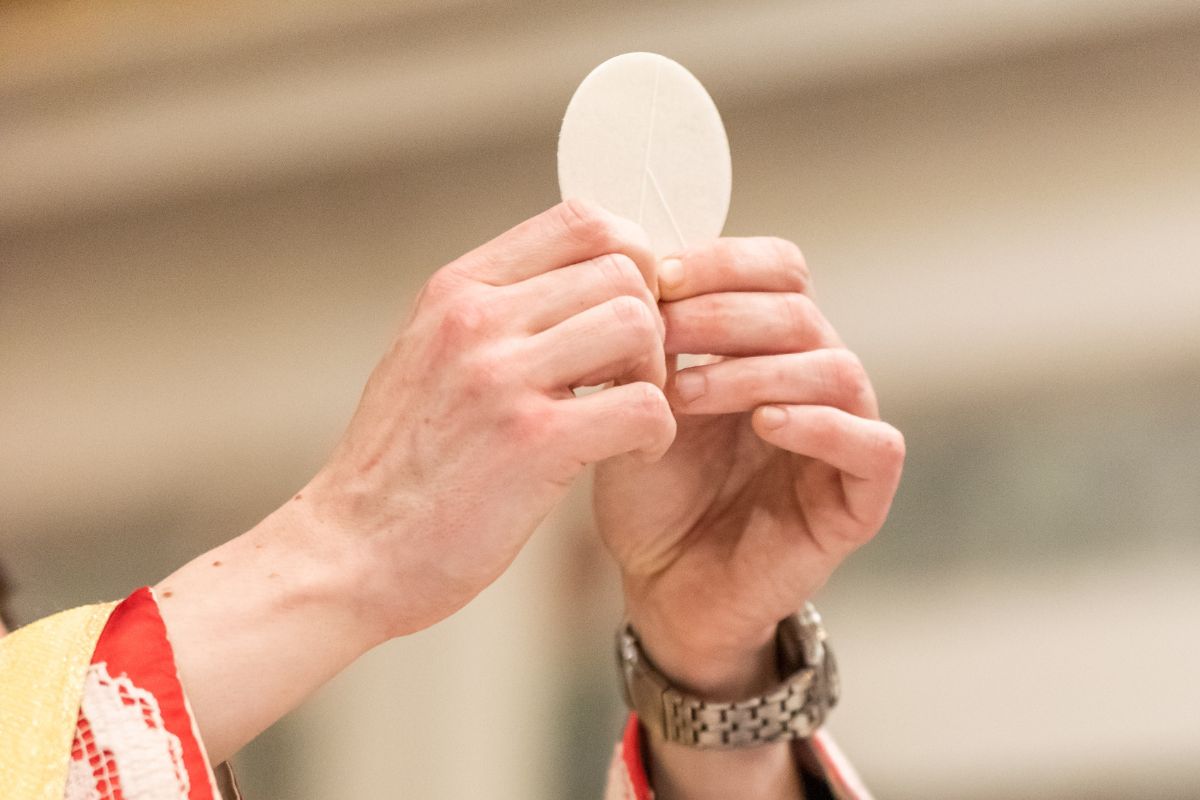
Man does not live by bread alone but by every word that comes forth from the mouth of God. The Israelites in the desert had to believe and obey God in order to feed on the manna that he gave them to eat. We must believe in and obey Jesus, the Son of God, who said, Take and eat, this is my Body; take and drink, this is the chalice of my Blood, in order to feed on the communion of his Body and Blood.
Unless you eat the flesh of the Son of Man and drink his blood, you do not have life within you.
Well, that is strange; Jesus was certainly speaking to people we would regard as being alive, and he speaks these same words to us today, and we are alive and would not expect to drop dead were we to stop receiving communion. So what is this life that Jesus is speaking of?
A teenage girl who gets in trouble and is grounded by her parents for a month might say, “I’m dead; I have no life.” She understands that there is life and there is life, though the life she will be missing out on is not the life that Jesus is speaking about. Of course she thinks of “life” as being out and about, doing things with her friends, exciting things.
Indeed, we readily identify life, real life, with movement and activity. We see the life of plants in their growth, the life of animals in their movement, and human life? We might identify uniquely human life in the things we do and make, from music and art, to cooking and gardening, to sports, business, and politics. Let’s not leave out ranching!
Yet, if these uniquely human activities that make their impact on the visible world did not come forth from the interior, invisible reality of human choice, we would regard them as less than human. The activity of a slave who is forced to work on a plantation is not as human as the activity of someone who chooses to garden. Further, choice properly follows on knowledge; flipping a coin is a way at coming to a decision, independent of knowledge and without anyone choosing.
We can consider the words of Jesus to his Apostles, seeking their intelligent collaboration in his work: You are my friends if you do what I command you. No longer do I call you servants, for the servant does not know what his master is doing; but I have called you friends, for all that I have heard from my Father I have made known to you. (Jn 15:15)
Yet, our ability to choose to collaborate in Jesus’ work as his “friends” is made possible because he has first chosen us to be his friends. (cf. Jn 15:16) Choosing us as his friends, he has chosen us also for communion in his Body and Blood.
Friendship is built upon a common life. St. Thomas Aquinas writes: “[Friendship] is mutual benevolence built upon a common life. Since there is a sort of sharing of man with God insofar as God shares his beatitude with us, a kind of friendship can be built upon this shared life. In regard to this sharing, it is said, God is faithful, through whom you have been called into communion with his Son. [1 Cor 1:9] Charity is the love that is built upon this friendship.” (IIaIIae q.23 a.1)
The life of sanctifying grace, which makes us to share in God’s life and nature, which is the beginning of beatitude in us, is what makes charity, the love of friendship with God, possible. As music and art, cooking and gardening, sports and business and politics are activities that reveal the unique character of human life, activities that proceed from charity make known the life of grace, our shared life with God.
Yet, the root of this life is hidden deep in the interior sanctuary of the soul, in the presence of God. So it is that Jesus says, When you pray, go into your room and shut the door and pray to your Father who is in secret; and your Father who sees in secret will reward you. (Mt 6:6) So it is that St. Paul writes, In the fulness of time, God sent forth his Son, born of woman, born under the law, to redeem those under the law, so that we might receive adoption as sons. And because you are sons, God has sent the Spirit of his Son into our hearts, crying, ‘Abba, Father!’ So through God you are no longer a slave but a son, and if a son then an heir. (Gal 4:4-7)
This is a life that is hidden with Christ in God. (cf. Col 3:3)
The life of charity in the Immaculate Heart of Mary, standing beneath the foot of the Cross of her Son, was far more intense, more truly “alive”, than all that this world thinks of as life. The Immaculate Virgin continues in that life in the glory of her Son, and from that life, she intercedes for us that we might worthily partake of the life of her Son, through communion in his Body and Blood.
So also, if a person enters a Catholic church and sees someone kneeling in prayer before Jesus in the Holy Eucharist, he will not see all the “exciting” activities that people usually associate with life, but hidden in that person might well be a life far more intense than what seems most “alive” to the world. The intensity of that life will bear fruit in works, proportioned to the intensity of the interior life, as the works of the Missionaries of Charity could be spoken of as the fruit of their two hours of daily Eucharistic adoration.
Whoever eats my flesh and drinks my blood remains in me and I in him. There is the shared life, but that life requires that our eating and drinking not be a mere appearance, contradicted by our outward actions and inward choices, but a true union of heart and mind with Christ.
And what is that life? Just as the living Father sent me and I have life because of the Father, so also the one who feeds on me will have life because of me. This is the life of the living God. This is indestructible life. Whoever eats my flesh and drinks my blood has eternal life – that begins already in this life – and I will raise him on the last day. The life of the living God in us is so powerful that it will transform and make glorious the bodies of those who share in the resurrection of life. (cf. Jn 5:28-29)
Communion in the Body and Blood of Christ is so intimate that he abides in each one of us and each one abides in him, or, as St. Catherine of Siena put it, “the soul is in God and God in the soul, just as the fish in the sea and the sea in the fish.” (Dialogue 2) At the same time, because we partake of the same Body of Christ, we, though many, are one Body in Christ. This is the deepest sharing possible to human beings in this life; it is the greatest common good in which we can partake in this life.
If we are living in the grace of God and partaking of the Body of Christ in holy communion, our union with each other in the Body of Christ is most real; not just the union here and now in this church, but our union with all the faithful throughout the world, even the most distant, hidden, and despised.
Seeing how we are united in the Body of Christ, seeing that we each receive the same gift, seeing that Jesus gives himself to others in the same manner he gives himself to us, we should show forth our understanding in mutual charity, according to Christ’s own commandment, As I have loved you, so must you love one another. (Jn 13:34)
Seek a Deeper Connection with God and Join Lay Cistercians of South Florida
Lay Cistercians of South Florida, is a community of lay people who seeks to have a deeper connection with God by living a life inspired by the monks and nuns through Lay Monasticism. Learn more about what is a Lay Cistercian on our website. Anyone who aspires to do the same as us, and is a confirmed Catholic is welcome to join us! We meet every second Saturday of the month at Emmanuel Catholic Church in Delray Beach, Florida.

This Content Has Been Reviewed For Accuracy
This content has undergone comprehensive fact-checking by our dedicated team of experts. Discover additional information about the rigorous editorial standards we adhere to on our website.