The People of God – Sermon by Father Levine
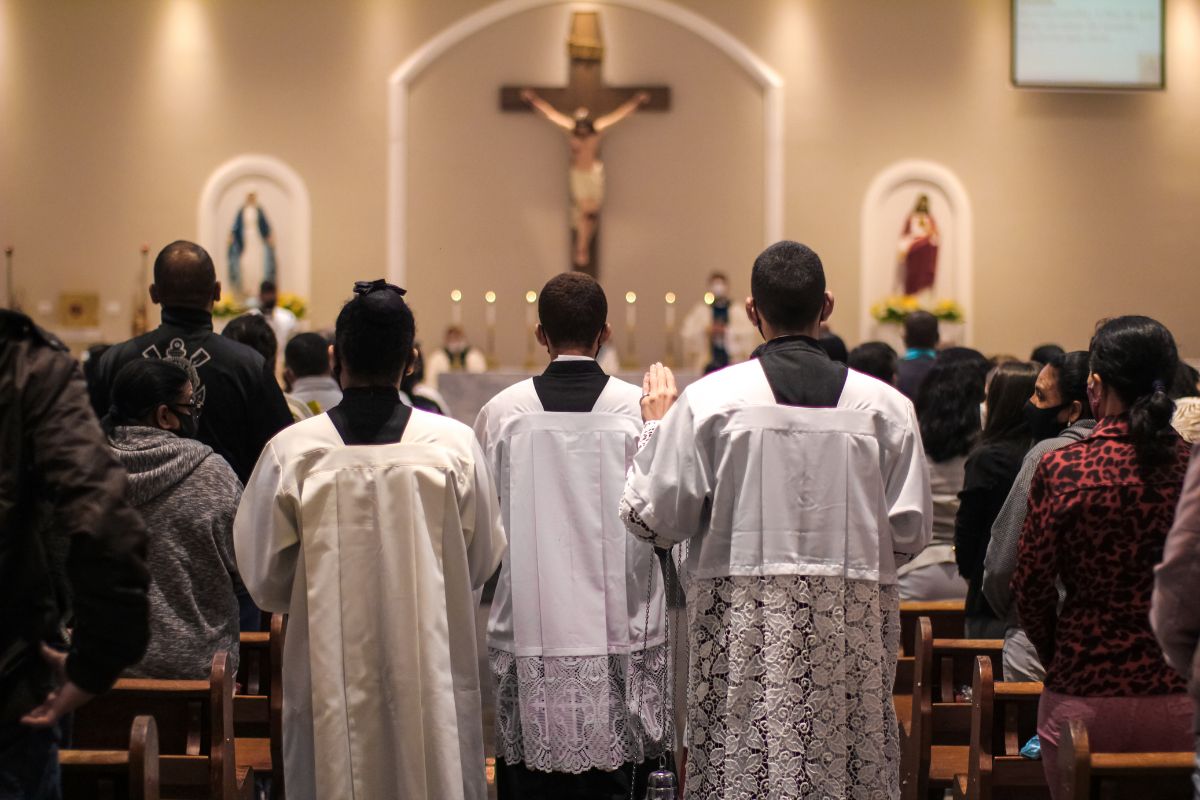
Fr. Joseph Levine; Holy Family Catholic Church and Missions, Burns, Oregon; June 14, 2026
If you hearken to my voice and keep my covenant, you shall be my special possession, dearer to me than all other people, though all the earth is mine. You shall be to me a kingdom of priests, a holy nation. God commanded Moses to give this message to the people of Israel at the foot of Mt. Sinai as a preliminary to establishing with them the covenant. God had delivered the Hebrew slaves from the land of Egypt and brought them to Mt. Sinai to make them his own people, the people of Israel, the covenant people, the people of God.
Well, for a Catholic today, that might evoke a big, “So what?” After all that is just the Jewish people, not the Christians, so it doesn’t really have anything to do with us. Indeed, many Christians think it is just a matter of “me” and “Jesus” and then choosing a “fellowship” community to pray together and socialize.
That is a rather unfortunate way of thinking. If the covenant people, the people of God, have nothing to do with us, then we have nothing to do with God. We are not saved merely as individuals, but as members of the covenant people, as members of the people of God.
One reason for this is that we are saved through the law of charity, and charity requires other people; another is that we have been created as social beings, which means that we find fulfillment in belonging to a social reality greater than ourselves. Just think about how it hurts to be excluded and how much we like to be included.
In the words of the Second Vatican Council: “God … does not make men holy and save them merely as individuals, without bond or link between one another. Rather has it pleased Him to bring men together as one people, a people which acknowledges Him in truth and serves Him in holiness.” (Lumen Gentium 9)
That is why he chose the people of Israel from among all the peoples of the earth. Nevertheless, the Council adds in that regard: “All these things, however, were done by way of preparation and as a figure of that new and perfect covenant, which was to be ratified in Christ, and of that fuller revelation which was to be given through the Word of God Himself made flesh.” (Ibid.) Therefore, “Christ instituted [the] new covenant, the new testament, that is to say, in His Blood, calling together a people made up of Jew and gentile, making them one, not according to the flesh but in the Spirit. This was to be the new People of God.” (Ibid.)
The Catechism of the Catholic Church speaks of the Church as “The People of God, the Body of Christ, and the Temple of the Holy Spirit.” (cf. CCC 781-810) These three titles, relating in turn to each of the persons of the Holy Trinity, illumine and complement each other.
I have made frequent reference to the Church as the Body of Christ, the Body of which Christ himself is the head, and that is built up and nourished by his Body, given us in the Holy Eucharist. Likewise, I have made frequent reference to the life of grace, the life of the children of God that we receive in the Church, which is the work of the Holy Spirit in us, whom we have from Christ, and who dwells in us, in our very bodies, as in a temple.
Today, it will be appropriate to say a few words about the Church as the new People of God, no longer one people among all the peoples of the earth, but redeemed by Christ from every tribe and tongue, people and nation, and made a kingdom and priests to our God. (cf. Rev 5:9)
In today’s Gospel, we hear about Jesus choosing his twelve Apostles. This is not merely a practical measure on his part, a mere choice of assistants in his ministry at the moment, an ad hoc measure, needed for the work at hand, then and there. Nor is it merely a choice of those who will happen to lay the foundations of the future Church. It is rather a very deliberate choice, full of meaning whereby Christ signifies his intention regarding the Church.
In the Old Testament, we learn that the Patriarch Jacob had twelve sons. God changed Jacob’s name to Israel and the twelve sons of Jacob became the patriarchs of the twelve tribes that would constitute the people of Israel. In choosing twelve Apostles, Jesus, himself the promised descendant of Jacob, who had received from Abraham the promise that in his offspring all the nations of the earth would be blessed, (cf. Gen 22:18; 28:13-14) sets himself in relation to the Apostles as Jacob stood in relation to his sons. That is, he constitutes the twelve Apostles as the Patriarchs of the new Israel, the Shepherds of the new People of God.
The prophet Hosea had announced, In the place where it was said to them, ‘You are not my people,’ it shall be said to them, ‘Sons of the living God.’ (Hos 1:10) And St. Peter announced the fulfillment in the people of the baptized, You are a chosen race, a royal priesthood, a holy nation, God’s own people, that you may declare the wonderful deeds of him who called you out of darkness into his marvelous light. Once you were no people but now you are the people of God; once you had not received mercy but now you have received mercy. (1 Pe 2:9-10) And St. Paul, You are no longer strangers and sojourners, but you are fellow citizens with the saints and members of the household of God. (Eph 2:19)
The Second Vatican Council describes what defines the Church as the People of God.
This “messianic people has Christ for its head, ‘Who was delivered up for our sins, and rose again for our justification’, and now, having won a name which is above all names, reigns in glory in heaven.” (LG 9) Men enter into the Church, the People of God, through baptism as through a door. (cf. LG 14)
We have as our status “The dignity and freedom of the sons of God, in whose hearts the Holy Spirit dwells as in His temple.” Our law is summed up in the new commandment to love as Christ loved us. Our goal is “the kingdom of God, which has been begun by God Himself on earth, and which is to be further extended until it is brought to perfection by Him at the end of time, when Christ, our life, shall appear, and ‘creation itself will be delivered from its slavery to corruption into the freedom of the glory of the sons of God’.” (Ibid.) “Established by Christ as a communion of life, charity and truth, [we are] also used by Him as an instrument for the redemption of all, and [have been] sent forth into the whole world as the light of the world and the salt of the earth.” (Ibid.) That is a summary of what the Second Vatican Council says about the People of God.
Through the 1970s and 1980s and beyond, the language referring to the Church as “the People of God”, language that is deeply rooted in Scripture and Tradition, was distorted to push for a sort of “democratization” of the Church. After all, if the Church is the “People of God”, shouldn’t it be ruled by “We the People”; after all are aren’t “we” the Church. Of course, the Council was also very clear on the hierarchical structure of the People of God. (cf. LG 8,10, 18-29)
This teaching about hierarchy in relation to the people is rooted in the word of God. If we look at the People of God in the Old Testament, when they were formed through the covenant on Mt. Sinai, we see that there was a hierarchical structure, with Moses, Aaron, and seventy elders who shared Moses’ “spirit”. Moses and Aaron were chosen by God, not by the people. The seventy elders were taken from among the people, but it was God who bestowed upon them some of the spirit that was on Moses. (cf. Nm 11:16-25)
The Church as the people of God has not arisen naturally from among the peoples of the earth, but has been established by God through Christ, the Son of God. The Greek word for “church”, “Ekklesia”, speaks of an assembly “called out” from among the nations, brought together into the new and eternal covenant, through the Blood of the Lamb. In the Church, we are not one people through the common blood of biological descent, but we are even more strongly bound together, through having been regenerated by the Blood of the Lamb.
Because the Church is established by God, its leadership comes from God, not from the people. So also, in today’s Gospel we see that it is Christ who chooses the twelve Apostles, whom he constitutes as the rulers over his Church. The bishops have followed them in their office and the priests have been constituted as collaborators in the work of the bishops.
We can say that the Church is the people of God, hierarchically structured. We should, however, understand that hierarchy does not mean, first of all, a military form of command and obedience. Rather, its root meaning is “sacred order”; it is the order of communication of divine gifts to men, through the covenant.
The gift of the Holy Spirit is communicated to the least of the faithful, in fulfillment of Moses’ prayer, Would that all the Lord’s people were prophets, that the Lord would put his spirit on them all. (Nm 11:29)
St. Benedict, in his rule for monks, shows forth in the monastery what should hold in the Church. The Abbot rules in the place of Christ, but he is to consult with all the monks, ready to listen even to the least, because “the Lord often reveals to the younger what is best.” (Rule, Ch. 2, 3)
The title, “Christ”, means anointed. Jesus Christ is anointed with the fulness of the Holy Spirit to bestow on his people. From his fulness we have all received. (Jn 1:16) The anointing of the Holy Spirit is communicated by Christ, the head of the Body, through the hierarchy, through the sacraments, to the faithful, who, having received the gift of the Holy Spirit, are quite capable of exceeding the hierarchy in holiness. Alas, since the communication of the gift depends on Christ working through his sacraments, not on the holiness of the minister, the minister might himself be devoid of the holiness that he communicates through the sacrament.
Sharing in the anointing of Christ, the faithful, each in their own manner, share in his three-fold mission as prophet, priest, and king, bearing witness to the truth by word and deed, offering spiritual sacrifices through Christ, offered in the Holy Sacrifice of the Mass, and governing in charity that portion of God’s kingdom that has been entrusted to their care, if only their own life.
Jesus Christ died for us while we were still sinners that being reconciled to God we might share the goods of his kingdom as members of his people.
Know that the Lord is God; he made us, we belong to him; We are his people, the sheep of his flock.
Seek a Deeper Connection with God and Join Lay Cistercians of South Florida
Lay Cistercians of South Florida, is a community of lay people who seeks to have a deeper connection with God by living a life inspired by the monks and nuns through Lay Monasticism. Learn more about what is a Lay Cistercian on our website. Anyone who aspires to do the same as us, and is a confirmed Catholic is welcome to join us! We meet every second Saturday of the month at Emmanuel Catholic Church in Delray Beach, Florida.

This Content Has Been Reviewed For Accuracy
This content has undergone comprehensive fact-checking by our dedicated team of experts. Discover additional information about the rigorous editorial standards we adhere to on our website.